Wild Leopard Spotted Near NUST University Islamabad for Third Time This Month – CCTV Footage Goes Viral
Published by VerseZip Current Affairs Desk
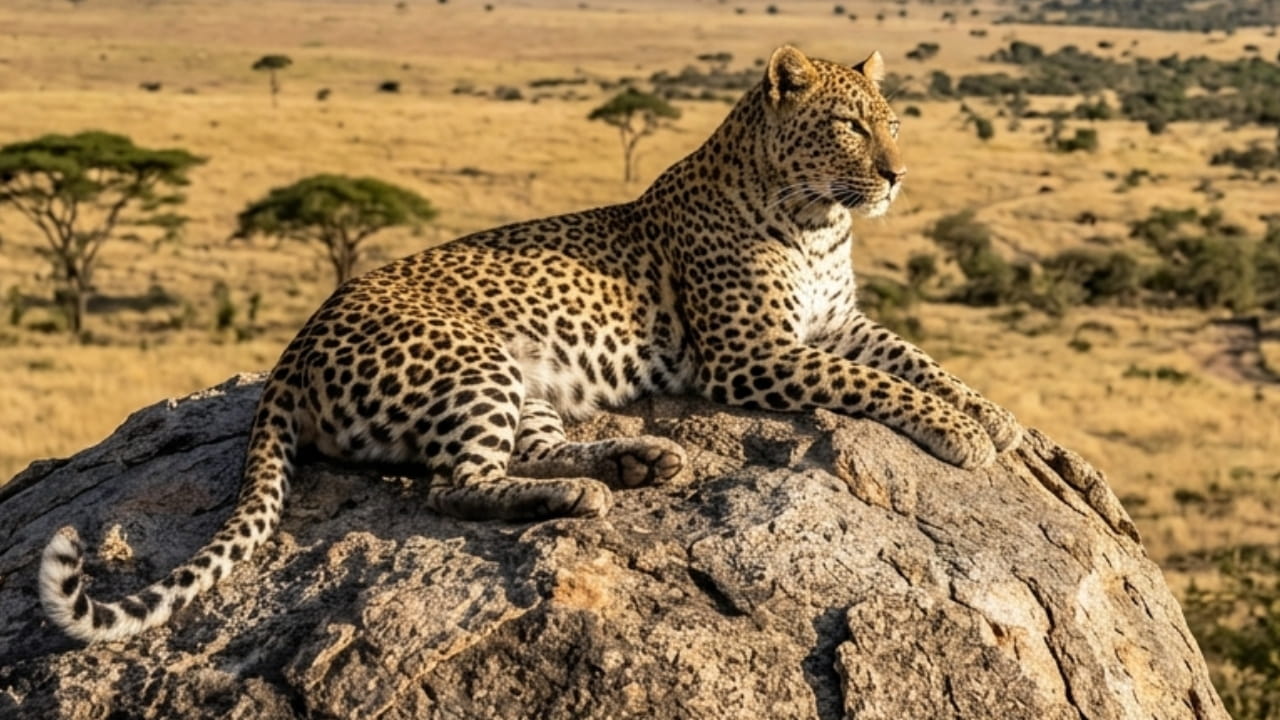
Islamabad's educational institutions are on high alert once again as the federal capital witnesses its third major leopard sighting this month. A leopard has been spotted near the National University of Sciences and Technology in Islamabad, with viral CCTV footage of the wild animal circulating online.
The recent video shows the leopard roaming near the NUST campus, prompting swift action from wildlife authorities. This latest incident has sent shockwaves through the university community and nearby residential areas, raising serious questions about human-wildlife coexistence in Pakistan's capital city.
What Happened? The NUST Leopard Sighting Explained
CCTV footage has revealed the presence of a leopard near the NUST University campus in Islamabad. The footage, which quickly went viral on social media platforms including Twitter and Facebook, shows a fully grown common leopard calmly walking through areas near the prestigious university campus. NUST is located in the H-12 Sector on Srinagar Highway, Islamabad, placing it in close proximity to the foothills of the Margalla Hills, the natural habitat of these magnificent predators.
The Islamabad Wildlife Management Board confirmed the sighting and said its team visited the site on March 25, installing trap cages to safely capture and relocate the animal. Officials added that coordination with the university administration is ongoing to ensure the safety of students and staff.
Timeline: Leopard Sightings in Islamabad (March 2026)
| Sighting | Location | Date | Status |
|---|---|---|---|
| First | International Islamic University (IIUI) | December 2025 | Campus shut down, traps installed |
| Second | IIUI Campus (Second Time) | March 16, 2026 | Traps installed, leopard evaded capture |
| Third | NUST University (H-12) | March 25-26, 2026 | Active monitoring, traps deployed |
Where Are These Leopards Coming From?
Experts say leopards are native to the nearby Margalla Hills and occasionally enter city areas at night through green belts and drainage channels. A preliminary report suggested the leopard may have reached the university from the Sector E-9 drain via F-9 Park. The IWMB suspected that the vagrant leopard followed natural rain water drains leading from the Margalla Hills all the way to the university premises.
Leopard Population in Margalla Hills National Park
- 2021 Camera Trap Study: At least 8 leopards identified
- 2022: Margalla Hills declared a leopard reserve
- 2026 Estimates: At least 5-12 leopards living in the park
- Park Size: 12,600 hectares
- Territory Range: Each leopard patrols up to 50 square kilometers
Understanding Leopard Behavior: Why Are They Entering Urban Areas?
Leopards are naturally present in the Margalla Hills National Park area and are highly adaptable, with scientific studies suggesting a home range that can extend up to 20 to 30 square kilometers, meaning occasional movement into adjoining areas is possible, particularly at night.
Leopard sightings around Islamabad often increase where urban development pushes closer to natural habitat. Campuses and housing areas near green belts can overlap with wildlife corridors, especially along boundary walls and patches of thick vegetation. Leopards are adaptable and largely nocturnal. They can move quietly at night when human activity drops, and may be drawn in by prey such as stray dogs or other small animals.
"If the leopard is not provoked, it does not harm humans. Most attacks by leopards on humans are in self defence. Intentional attacks are rare."
Historical Leopard Sightings in Islamabad
| Year | Location | Outcome |
|---|---|---|
| 2015 | Margalla Hills | First sightings in six years |
| 2022 | Saidpur Village | Panic among villagers |
| 2023 | DHA Islamabad | Leopard trapped after six hours |
| Dec 2025 | IIUI Campus | Campus shutdown, traps installed |
| March 2026 | IIUI Campus (Second) | Leopard evaded capture |
| March 2026 | NUST Campus | Active monitoring ongoing |
Meet Shezadi: The Famous Margalla Hills Leopard
One of the most well-documented leopards in Islamabad has been given a special name. A female common leopard named Shezadi has been found to be a permanent resident of territory between Trails 4 and 6 inside the Margalla Hills National Park. Shezadi has been caught on camera traps set up by IWMB staff for several evenings in a row.
From the areas that have been sampled using camera traps since 2019, at least five individual common leopards have been identified living within the boundaries of the Margalla Hills National Park. Shezadi is now familiar with the trails that humans take and avoids them during the day.
Conservation Status: The Common Leopard in Pakistan
- Critically Endangered: Pakistan's common leopard population faces multiple threats
- Population Estimate: In the hundreds nationwide
- Protected Areas: Margalla Hills, Ayubia National Park, Machiara National Park
- Key Threats: Habitat loss, poaching, human-wildlife conflict
- Ecological Importance: Keeps wild boar and goat populations in check
Safety Guidelines for Students, Staff and Residents
| Guideline | Why It Matters |
|---|---|
| Avoid walking alone after sunset | Leopards are most active at night |
| Use well-lit routes, avoid bushes | Leopards use vegetation for cover |
| Do not chase or corner the animal | Threatened leopards may attack in self-defense |
| Report sightings immediately to security | Swift response prevents dangerous encounters |
| Do not leave food waste outside | Open garbage attracts prey animals |
What IWMB Is Doing to Capture the Leopard
Authorities have urged residents to remain cautious, avoid unnecessary outdoor movement, and immediately report any sightings as efforts continue to safely secure the animal. The IWMB has deployed trap cages and is actively monitoring the leopard's movements in sectors H-10 and H-12.
Wildlife officials have dart guns but will use them only as a last resort and only if the animal is in a confined space. It takes approximately 15 minutes for the tranquilizer to take effect. A thermal drone is being arranged to better track the animal. Camera traps have been installed on the campus to monitor the leopard's movement.
What Happens If the Leopard Is Captured?
If successfully captured, the leopard will be handled according to established protocols. The IWMB has converted the former Islamabad Zoo into a wildlife rescue and rehabilitation centre, where the animal will be kept and eventually released back into its natural habitat in the Margalla Hills.
A Sign of Healthy Ecosystem or Growing Conflict?
These leopard sightings are an indication towards the improvement of the environment in the Margalla Hills National Park. Multiple past reports have highlighted leopard movement in trails and forested zones near Islamabad, monitored by camera traps. Experts note that leopard presence near Islamabad reflects wildlife resurgence and habitat recovery, but also underscores increasing human-wildlife interaction challenges.
The common leopard is actually not so common anymore, and Islamabad's citizens can feel a sense of pride that these endangered animals have taken up permanent residence next to a busy city in the protected Margalla Hills. IWMB officials emphasize that it is important for people to understand leopard behavior and practice responsible coexistence.
Frequently Asked Questions
Is the leopard near NUST dangerous?
Wildlife officials say that if the leopard is not provoked, it does not harm humans. Avoid approaching or cornering the animal.
Where did the leopard come from?
Experts say leopards are native to the nearby Margalla Hills and occasionally enter city areas at night through green belts and drainage channels.
How many leopards are in Margalla Hills?
A 2021 camera trap study found at least eight leopards in the protected area. Estimates suggest there are likely at least a dozen inside the park.
What should I do if I see a leopard?
Do not approach, chase, or try to photograph it. Report immediately to campus security or call IWMB. Move away slowly and calmly.
Has anyone been injured in these sightings?
No injuries have been reported at NUST or IIUI. In a 2023 DHA incident, three people were injured during the capture operation.
Is NUST campus closed?
As of now, NUST remains operational with enhanced security measures and wildlife monitoring in place.
Final Thoughts
The repeated leopard sightings near Islamabad's educational institutions highlight a growing challenge for Pakistan's capital: how to balance urban expansion with wildlife conservation. The Margalla Hills are a vital sanctuary for the endangered common leopard, and their presence near the city is a testament to the health of this ecosystem.
However, with each sighting, the need for responsible coexistence becomes more urgent. Students, residents, and authorities must work together to ensure both human safety and leopard conservation. The IWMB's efforts to safely capture and relocate the animal demonstrate a commitment to this balance.
This is a developing story. Stay tuned for updates as wildlife authorities continue their efforts to safely capture and relocate the leopard. Follow official advisories and prioritize safety.
Share this Current Affairs Update:
Leave a Comment
Your feedback is important to us. Submitted comments are kept private and are for internal review only.