Gold Loses All Yearly Gains as Iran War Increases Inflation Fears: What Investors Must Know
Published by VerseZip Business Desk
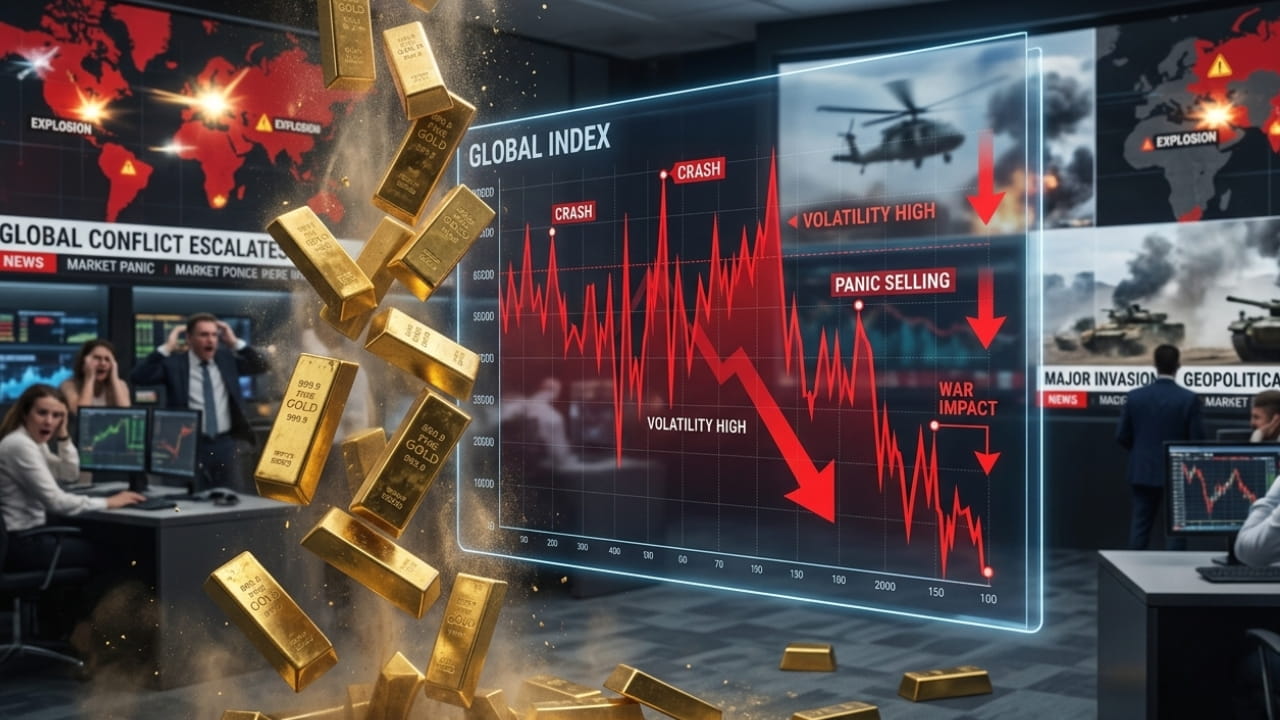
Gold just experienced its absolute worst week since 1983. The escalating conflict in Iran is sending severe shockwaves through every corner of the global economy. As global supply chains face unprecedented disruptions, your hard-earned money and investments are caught directly in the crossfire.
If you are currently holding gold, you are likely staring at your portfolio in disbelief, wondering: What exactly went wrong?
Here is the reality of what happened. Gold dropped by an astonishing 11% in a single week. The precious metal is now down more than 14% since the war began. On Friday, international gold prices dipped below $4,500 a troy ounce, completely erasing the massive profits it had built up over the past two months. This is not just a minor market correction; it is a full-blown collapse.
And the most confusing part? This is happening while bombs are falling—the exact geopolitical scenario where gold is supposed to skyrocket as a safe investment. Earlier this year, gold had gained 64%, posted its best year since 1979, and touched a record high of $5,600. Now, those gains are vanishing faster than investors can click the sell button.
Why is Gold Falling During a War? The Brutal Truth
This is the paradox keeping financial experts awake at night. War traditionally means fear, and fear usually drives gold prices up. That has been the standard financial playbook for decades. But not this time.
Here is why this crisis is different, broken down into three simple reasons that most financial outlets hesitate to explain clearly:
- 1. Investors Are Selling Gold Just to Survive: When global stock markets crash hard and investors start losing massive amounts of money, they enter "survival mode." To pay off debts and raise instant cash (liquidity), they are forced to sell whatever holds value—including gold. Gold is not being dumped because it is worthless; it is being sold because people desperately need cash right now.
- 2. The Surging US Dollar: Gold is traded internationally in US dollars. Because the dollar has grown incredibly strong due to global panic, gold has become far too expensive for buyers using other currencies. When demand from international buyers drops, the price naturally falls.
- 3. The Nightmare of High Interest Rates: This is the biggest silent killer of gold prices. Rising oil prices are fueling massive inflation. Because of this, central banks (like the US Federal Reserve) refuse to cut interest rates. When interest rates remain high, investors prefer to put their money in bank accounts or bonds that pay high interest, rather than holding gold, which pays zero interest.
"Gold is heading for the worst drop since the spring of 2013. The oil-price shock driven by the Iran War has forced traders to bet that central banks will now keep interest rates painfully high to fight energy-led inflation."
The Energy Crisis Nobody Was Prepared For
To truly understand the weight of this financial collapse, we have to look at the root cause. The 2026 Iran conflict, which began in late February, saw intense military strikes targeting key leadership and infrastructure.
In retaliation, Iran played its most devastating economic card: the closure of the Strait of Hormuz. This single action disrupted 20% of the world's global oil supply and massive volumes of natural gas. The International Energy Agency (IEA) has already described this as the greatest global energy and food security challenge in modern history, surpassing even the crises of the 1970s.
As a result, Brent crude oil prices surged to $120 a barrel. Transit costs for oil tankers have skyrocketed, and everyday citizens are paying the price at the pump. For instance, petrol prices in the US jumped sharply by 88 cents in just one month, ripping money straight out of ordinary household budgets. For deeper insights on global market reactions, you can explore our Business News section.
The Global Economic Fallout:
- Asia Hit Hardest: From New Delhi to Seoul, governments are enforcing fuel-saving measures. South Korea's stock index suffered a massive 12% single-day crash.
- Europe Faces Recession: With gas storage at critically low levels, European manufacturing is facing permanent shutdowns due to surging electricity costs.
- Emerging Markets Suffer: Energy-importing nations like Pakistan, Sri Lanka, and the Philippines are facing severe macroeconomic shocks, threatening basic food security.
The Ghost of Stagflation
We are entering a nightmare economic scenario known as Stagflation—a rare and brutal combination of weak economic growth, rising unemployment, and high inflation. The US economy lost 92,000 jobs recently, yet inflation remains stubbornly high above target levels.
The Federal Reserve is stuck. They recently voted to keep their benchmark interest rate at a high 3.5%-3.75%. This means your mortgage rates, credit card interest, and car loans will remain painfully expensive for the foreseeable future. Experts who previously predicted rate cuts this year are now warning that we might see rate hikes instead.
What Should You Do Right Now? A Practical Action Plan
The situation is dire, but panic is not a strategy. Here is what financial experts suggest you do to protect your assets right now:
- For Gold Investors: Do not panic sell at the absolute bottom. The current selling pressure is driven by people needing quick cash, not because gold has lost its fundamental value. Watch the $4,250–$4,400 support zone closely; it could offer a generational buying opportunity.
- For Borrowers: Lock in any fixed interest rates you possibly can. The risk of rates going even higher is very real.
- For Citizens in Emerging Markets: Brace for heavily imported inflation. Protect your savings by hedging against local currency devaluation if possible. Stay updated via our Business News hub.
- For Everyday Consumers: Tighten your household budget immediately. The costs of fuel, groceries, and basic necessities are all heading in one direction: upward.
The Bottom Line
Gold losing all of its yearly gains is not just an isolated market story; it is a glaring warning siren. It tells us that the global financial system is under immense, breaking-point stress. The war in the Middle East is no longer a distant event on the news—it is actively reaching into your grocery bill, your mortgage payments, and your retirement savings.
While history shows that gold usually bounces back strongly during prolonged periods of stagflation, the journey there will be incredibly rough. Right now, this historic price crash serves as a stark and terrifying reminder: no asset is truly "safe" when the whole world is on fire.
Share this Economic Alert:
Leave a Comment
Your feedback is important to us. Submitted comments are kept private and are for internal review only.