Petrol Price Relief: Govt Approves Rs100 Billion Fund to Stabilize Fuel Prices in Pakistan
Published by VerseZip Business Desk
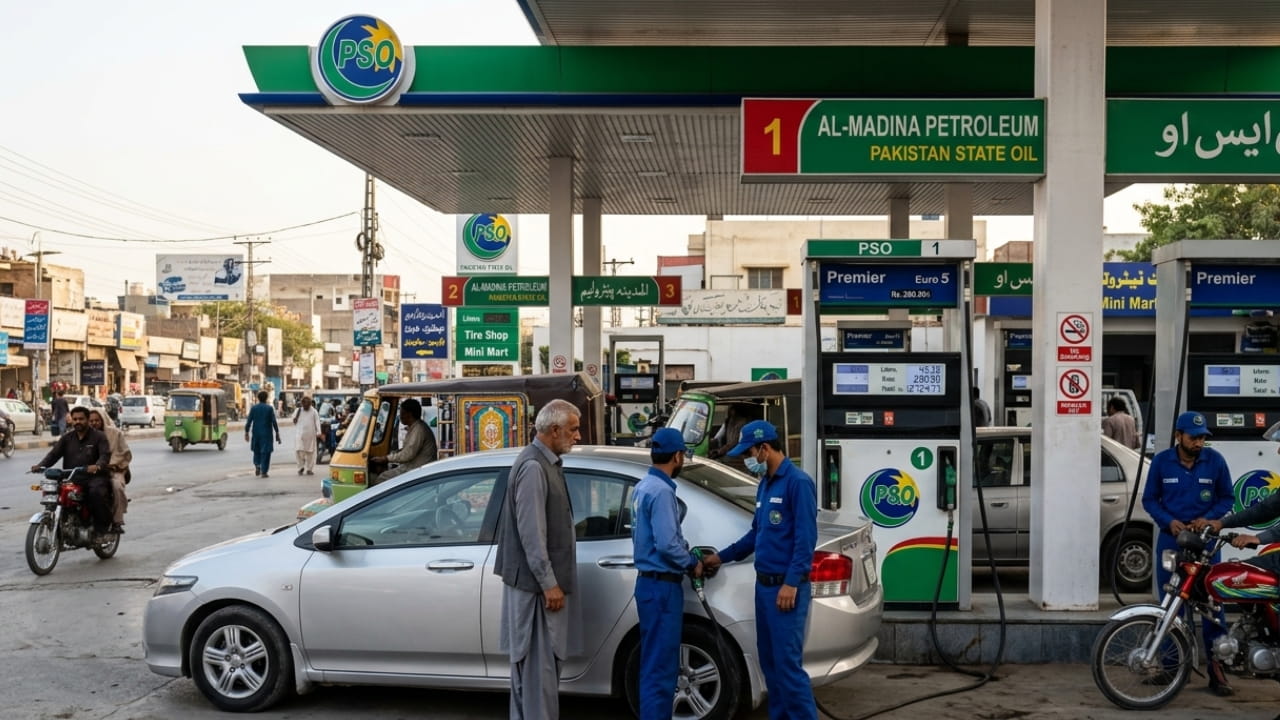
In one of the biggest economic relief decisions of the year, the Pakistani government has formally approved a Rs100 billion fund to stabilize petrol and diesel prices across the country. At a time when global oil prices are hitting record highs due to Middle East tensions, this move is being seen as a major relief for millions of ordinary Pakistanis who depend on fuel every single day.
What Exactly Happened?
The Economic Coordination Committee of the Cabinet approved a Rs100 billion Technical Supplementary Grant for the Prime Minister's relief initiative. The Federal Public Sector Development Programme for fiscal year 2025-26 has been slashed by 10 per cent, bringing it down from Rs1,000 billion to Rs900 billion, specifically to maintain the prices of petrol and high speed diesel.
In simple words, the government decided to cut its own development spending so that the common citizen does not have to pay more at the petrol pump. This is a bold and direct relief decision that puts public welfare ahead of infrastructure projects.
Why Was This Fund Needed?
The answer lies in what is happening in the world right now. Pakistan's government had already increased petrol and diesel prices by Rs55 per litre as the ongoing conflict in the Middle East sent global oil prices sharply higher and disrupted energy supply routes. Pakistan's Petroleum Minister confirmed that oil prices surged from $70 to $160-170 per barrel in just a matter of weeks, making fuel imports incredibly expensive.
This was a crisis that no government could simply ignore. With petrol and diesel being the backbone of Pakistan's transport, agriculture, and industry, keeping prices under control became a matter of national economic survival.
Key Relief Fund Details
- Total Fund Approved: Rs100 Billion
- Source of Funds: PSDP Development Budget Cut
- Current Petrol Price: Rs321.17 per litre
- Current Diesel Price: Rs335.86 per litre
- Government Subsidy (First Week): Rs23 Billion
- Government Subsidy (Second Week): Rs48 Billion
How Will the Rs100 Billion Be Used?
The deducted PSDP funds will be channeled into the Prime Minister's Austerity Fund 2026. Following directions from the Prime Minister, the Oil and Gas Regulatory Authority has been allocated Rs27 billion from the Prime Minister's Austerity Fund. It has been decided that the Prime Minister's Austerity Fund will be used to pay a subsidy of Rs23 billion to maintain the prices of petrol and HSD for the week of March 14 to March 20. Similarly, to maintain prices for the week of March 21 to March 27, the government will be paying an estimated Rs48 billion as Price Differential Claims.
So the government is paying out of its own pocket, week after week, to make sure petrol and diesel prices do not rise further at the pump.
| Period | Subsidy Amount | Purpose |
|---|---|---|
| March 14-20, 2026 | Rs23 Billion | Maintain petrol and HSD prices |
| March 21-27, 2026 | Rs48 Billion | Price Differential Claims |
| Total Allocated | Rs100 Billion | Prime Minister's Relief Initiative |
What Are the Current Petrol and Diesel Prices?
Despite the global price spike, the government has managed to keep pump prices controlled. As of March 2026, petrol is priced at Rs321.17 per litre, while high speed diesel costs Rs335.86 per litre.
High speed diesel stays at Rs335.86 and petrol at Rs321.17 as the government absorbs Rs176.41 and Rs77.98 per litre increase respectively, extending support to Oil Marketing Companies. Without this relief fund, prices could have gone significantly higher, and that would have hurt every Pakistani family.
How Was the Development Budget Cut?
A cut of Rs68,596 million has been imposed on Federal Ministries and Divisions, bringing their allocation down from Rs685,962 million to Rs617,366 million, while allocations for corporations have been slashed by Rs31,403 million. Federal Minister for Planning Ahsan Iqbal confirmed that a uniform 10 per cent cut has been applied across all development projects.
| Item | Original Allocation | After 10% Cut |
|---|---|---|
| Total PSDP | Rs1,000 Billion | Rs900 Billion |
| Federal Ministries and Divisions | Rs685,962 Million | Rs617,366 Million |
| Corporations | — | Rs31,403 Million Cut |
What Does the IMF Say?
The International Monetary Fund, during ongoing economic review talks, had also urged the government to control non-essential expenditures amid global tensions. The IMF mission had started talks with Pakistani officials on the third review of a $7 billion Extended Fund Facility multi-year program. The IMF noted that while considerable progress was made in the discussions, these will continue in the coming days, including to more fully assess the impact of recent global developments on Pakistan's economy. Analysts warned that if oil prices remain elevated, it would upset inflation and interest rate outlooks, making the government's decision to absorb costs even more critical.
Targeted Subsidy: For Everyone or Just Motorcyclists?
This is an important question the government is now debating. To cushion the impact, the federal government can either reduce the Petroleum Development Levy and subsidize petrol for all consumers, or introduce a targeted subsidy focused only on motorcyclists. A targeted plan would provide partial relief only to motorcyclists, who make up the majority of daily commuters. With over 30 million motorcycles on the road consuming about a quarter of the country's petrol, this option directly supports lower- and middle-income households.
High-Octane Fuel: The Rich Will Pay More
In a pivotal decision aimed at rebalancing economic pressures and fostering public welfare, Prime Minister Shehbaz Sharif approved a significant increase in the levy applied to high-octane fuel, a fuel type predominantly consumed by luxury vehicles. The government has explicitly stated that the prices of fuels commonly used by lower- and middle-income groups will remain entirely unchanged, a crucial assurance for millions of Pakistanis who rely on standard petrol and diesel for their daily commute and livelihoods. Furthermore, authorities have clarified that this increase will not impact public transport fares, ensuring that daily commuters are not burdened by higher travel costs.
Wheat Procurement Also Approved
In the same ECC meeting, the government also made another big decision for food security. The ECC approved the procurement of up to one million metric tons of wheat under the Interim National Wheat Policy 2025-26. The wheat will be procured via a transparent and competitive private-sector process to bolster federal strategic reserves while maintaining market stability, with officials emphasizing a flexible approach allowing adjustments based on crop assessments, market conditions, and storage capacity.
Expert Analysis: Is This Sustainable?
While the government's decision has been widely welcomed by the public, economists are raising some important questions. The subsidy burden is growing fast. Weekly payouts of Rs23 to Rs48 billion are not easy to sustain over the long term. The development budget cut means slower infrastructure growth, which could affect roads, schools, hospitals, and other public services. Pakistan's oil import bill is massive. Last year, Pakistan imported petroleum products worth $16 billion, accounting for the most on Islamabad's $58.4 billion import bill.
Pakistan's Oil Import Reality
- Annual Petroleum Imports: $16 Billion
- Total Import Bill: $58.4 Billion
- Oil as Percentage of Imports: 27%
- Impact of $5 Oil Price Increase: $1 Billion Added to Import Bill
Government's Message to the Public
The government has urged citizens to avoid unnecessary travel, adopt fuel-saving practices, and promote shared mobility such as carpooling. Owners of multiple vehicles are encouraged to use low-fuel-consumption cars to conserve national resources. To provide maximum relief during Eid-ul-Fitr, the Prime Minister decided that fuel prices would remain unchanged, urging citizens to act responsibly and avoid unnecessary fuel consumption.
Frequently Asked Questions
What is the current petrol price in Pakistan?
As of March 2026, petrol is priced at Rs321.17 per litre.
What is the current diesel price in Pakistan?
High speed diesel is priced at Rs335.86 per litre.
How much relief fund has the government approved?
The government has approved a Rs100 billion relief fund to stabilize fuel prices.
Where is the money coming from?
The funds come from a 10 per cent cut in the Public Sector Development Programme budget.
Why were fuel prices increased?
Global oil prices surged from $70 to $160-170 per barrel due to the Middle East conflict, making fuel imports significantly more expensive.
Will this relief continue?
The government is committed to maintaining price stability, but the long-term sustainability depends on global oil market developments and fiscal constraints.
Final Thoughts
The approval of the Rs100 billion relief fund is a clear signal that the government of Pakistan is standing with its people during one of the most challenging fuel crises in recent memory. While the global oil market continues to remain unpredictable because of Middle East tensions, Pakistan's leadership has chosen to absorb the pain rather than pass it on to the common man.
However, the road ahead is not easy. The government will need to manage a careful balancing act, keeping fuel prices stable while also maintaining fiscal discipline under the IMF program. The coming weeks will be critical in deciding whether this relief fund is enough, or whether further measures will be needed.
For now, the message is clear: ordinary Pakistanis will not be left alone to face the fuel price storm.
Share this Business Update:
Leave a Comment
Your feedback is important to us. Submitted comments are kept private and are for internal review only.