Pakistan Academy of Engineering Proposes Underground Rail for Karachi
Published by VerseZip Auto Desk
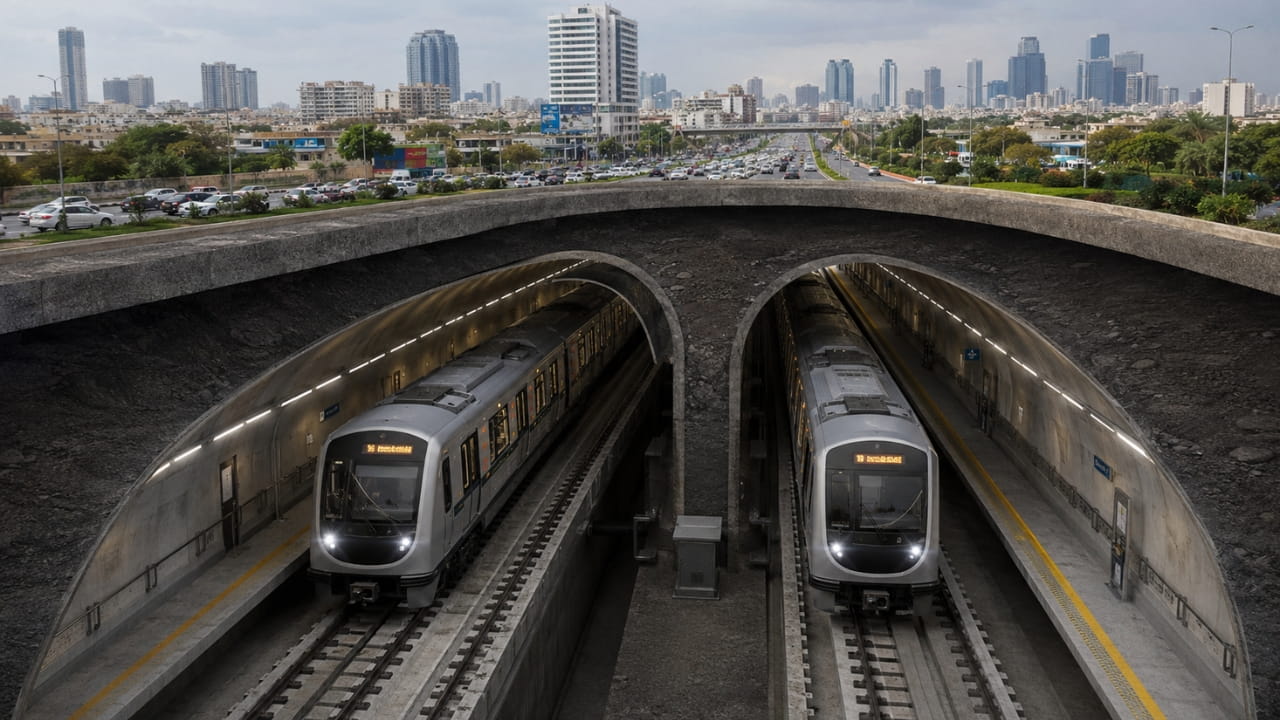
Karachi needs reliable transit to handle its massive population and daily traffic gridlock. The Pakistan Academy of Engineering (PAE) recently proposed a long-term solution: a new underground railway network.
The academy introduced this plan during its 40th Symposium, titled "Importance of Underground Mobility in a Megacity." Experts from Pakistan, the United States, and China shared data from cities like Singapore, New York, and Delhi to show how underground rail systems improve urban life.
Proposed Underground Corridors
The engineering team identified two specific routes for the project. These lines aim to connect some of the busiest commercial and residential areas in the city.
The first proposed corridor runs from Numaish Chowrangi to Merewether Tower. The second corridor connects FTC on Sharea Faisal to I.I. Chundrigar Road and finally to Tower. These routes target major hubs to maximize daily commuter volume.
Proposed Underground Routes
Integrating Rail with Current Transit
The PAE intends for this railway to work alongside Karachi's current Bus Rapid Transit (BRT) system. This integration creates a comprehensive public transport network capable of handling more passengers than current options.
PAE President Prof. Dr. Brig. (retd.) Nasim Akhtar Khan emphasized that rapid population growth requires proactive infrastructure planning. He stated that underground rail offers a sustainable way to meet the mobility demands of future generations.
| Project Aspect | Details |
|---|---|
| Proposing Body | Pakistan Academy of Engineering (PAE) |
| Routes Proposed | 2 corridors |
| Corridor 1 | Numaish Chowrangi to Merewether Tower |
| Corridor 2 | FTC (Sharea Faisal) to I.I. Chundrigar Road to Tower |
| Integration | With Bus Rapid Transit (BRT) system |
| Symposium | 40th Symposium of PAE |
Benefits of the Proposed Network
Experts believe the underground project will directly address several chronic city issues. It offers a path to reduce traffic congestion and improve connectivity between residential and business zones.
A rail system provides a safer, more reliable mode of transport for millions of daily commuters. Furthermore, moving transit underground helps lower pollution levels, contributing to a cleaner urban environment.
Expected Benefits
- Reduced Traffic Congestion: Moving transit off crowded surface streets
- Improved Connectivity: Connecting residential and business zones
- Safer Travel: More reliable transport for millions of commuters
- Lower Pollution: Underground transit reduces emissions
- Integrated Network: Works alongside BRT system
- Sustainable Mobility: Long-term solution for population growth
Learning from Global Cities
The PAE symposium brought together experts from Pakistan, the United States, and China to share best practices. Cities like Singapore, New York, and Delhi have successfully implemented underground rail systems that transformed urban mobility.
By studying these international examples, Karachi can develop a rail network that meets its unique needs while avoiding common pitfalls. The proposed routes target the city's busiest corridors to maximize impact.
Frequently Asked Questions
Why does Karachi need an underground rail network?
Karachi faces severe traffic congestion and transportation limitations due to its large population. An underground rail network offers a sustainable, high-capacity solution that moves transit off crowded surface streets.
What specific routes did the PAE propose?
The academy proposed two corridors. One runs from Numaish Chowrangi to Merewether Tower, and the other connects FTC on Sharea Faisal to I.I. Chundrigar Road and Tower.
How will this project affect current bus systems?
The underground rail network aims to complement the existing Bus Rapid Transit (BRT) lines. This combination creates an integrated system that serves a higher number of passengers across the city.
Who developed this proposal?
The Pakistan Academy of Engineering (PAE) presented this proposal during its 40th Symposium. Transport and engineering experts from Pakistan, the United States, and China collaborated to review global best practices for the plan.
What are the expected benefits of this project?
The project aims to reduce traffic congestion, improve connectivity between residential and business areas, provide safer travel options, and lower pollution levels in the city.
Final Thoughts
The PAE proposal highlights the necessity of long-term planning for Karachi's transport future. By studying international successes, the city can create a safer and more efficient commute for its millions of residents.
While the project requires significant investment and planning, the potential benefits for Karachi's economy, environment, and quality of life make it a compelling vision for the city's future. The PAE's proposal provides a valuable starting point for policymakers and stakeholders to consider as they address the city's transport challenges.
Share this Auto Update:
Leave a Comment
Your feedback is important to us. Submitted comments are kept private and are for internal review only.