India Bans Telegram Over Fake NEET 2026 Exam Paper Leaks
Published by VerseZip Current Affairs Desk
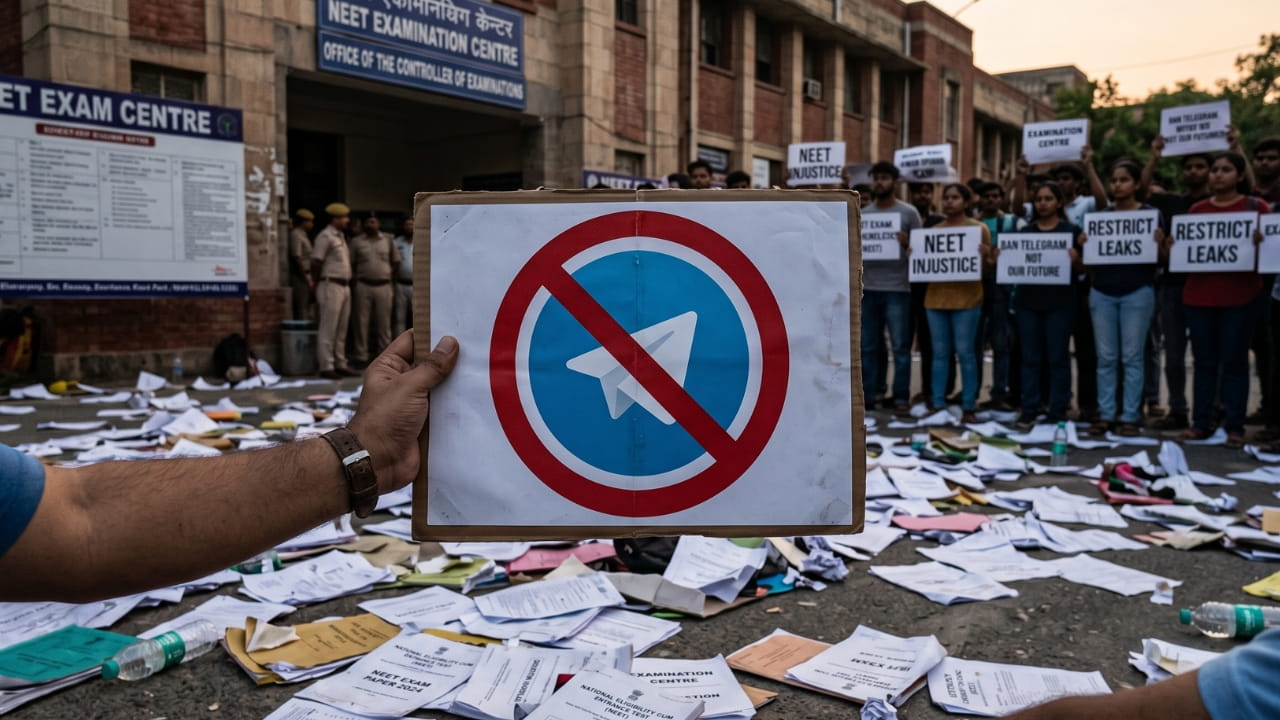
The Indian government just restricted millions of students from accessing a major messaging app. The news that India bans Telegram broke just days before the national medical tests. Authorities initiated this block to stop criminals from selling fake exam papers. The Ministry of Electronics and Information Technology completely blocked the app across the country until June 22, 2026. This strict timeline directly covers the National Eligibility cum Entrance Test (NEET-UG) re-examination scheduled for June 21.
Why India Bans Telegram Message Editing
Beyond simply blocking the app, the government forced the company to disable its message-editing tool until June 30, 2026. The National Testing Agency (NTA) discovered that scammers manipulated this exact feature to trick anxious students. Criminals posted random text weeks before the test, waited for the actual exam to finish, and then edited the old message to include the real questions. Because the app keeps the original posting date, these edited messages looked like authentic early paper leaks.
Key Facts at a Glance
Fighting Organised Cheating Rackets
Fraudsters created highly organized cheating networks to exploit desperate medical school applicants. The NTA flagged dozens of specific public groups operating under names like "PAPER LEAKED NEET" and "REE NEET MAFIAA" that advertised guaranteed access to test materials. Scammers demanded hefty payments ranging from ₹14,000 to ₹1,000,000 in exchange for the fake documents. Authorities stepped in because these targeted cybercrimes threatened the integrity of the entire national examination process.
| Aspect | Details |
|---|---|
| Platform Restricted | Telegram |
| Fraud Method | Edited old messages to look like leaked exam papers |
| Scam Groups Named | "PAPER LEAKED NEET", "REE NEET MAFIAA" |
| Payment Range | ₹14,000 to ₹1,000,000 |
| Legal Authority | Section 69A, Information Technology Act 2000 |
Digital Rights Groups Protest After India Bans Telegram
The sudden restriction angered both company executives and digital privacy advocates. Telegram founder Pavel Durov criticized the block, stating that the action unjustly punishes over 150 million ordinary Indian users. The Internet Freedom Foundation (IFF) filed an official objection, arguing that the law only allows the state to block specific pieces of information, not shut down an entire platform. Consequently, Telegram lawyers quickly filed an urgent petition at the Delhi High Court to challenge the temporary suspension.
Key Stakeholder Positions
- Indian Government: Block necessary to protect exam integrity
- Telegram (Pavel Durov): Criticized the block as unfair to 150+ million users
- Internet Freedom Foundation: Filed objection, called it disproportionate
- Telegram Legal Team: Filed urgent petition at Delhi High Court
- NTA: Defended the platform-wide restriction as last resort
Understanding the Section 69A Legal Action
The Ministry of Electronics and Information Technology executed this blockade using Section 69A of the Information Technology Act, 2000. This specific law grants the central government the power to restrict public access to digital platforms to protect public order. While the IFF called the move a disproportionate response, the NTA insisted the platform-wide restriction remained a necessary last resort. The agency previously tried taking down individual fraudulent channels, but scammers simply created new groups within minutes.
Frequently Asked Questions
Why did India ban Telegram in June 2026?
The government temporarily blocked the app to stop organized cheating rackets from selling fake test papers. Officials wanted to secure the NEET-UG 2026 medical entrance re-examination scheduled for June 21.
How long will the Telegram block last?
The complete app restriction lasts until June 22, 2026. However, the order disabling the message-editing feature will remain active until June 30, 2026.
What is Section 69A of the IT Act?
Section 69A is a specific Indian law that allows the central government to block public access to websites and digital applications. Authorities use this law when they believe an online platform threatens national security or public order.
Did Telegram fight the government ban?
Yes, company lawyers immediately filed a petition at the Delhi High Court to challenge the sudden restriction. Founder Pavel Durov publicly complained that the block unfairly punishes 150 million regular users.
How were scammers using Telegram to cheat?
Scammers posted random text before the exam, waited for the test to finish, and then edited their old messages to include the real questions. The app kept the original posting date, making these messages look like authentic early leaks.
Final Thoughts
Securing a national medical examination requires tough decisions, but shutting down entire communication networks sets a worrying legal precedent. Millions of innocent students lost access to their legitimate study groups right before the most important test of their lives.
The Telegram ban highlights the growing tension between governments fighting cybercrime and protecting digital rights. While the NTA's concerns about exam integrity are valid, the blanket restriction raises questions about proportional response. The Delhi High Court will ultimately decide whether this block was justified or an overreach of state power.
Lawmakers must find a better balance between stopping cybercriminals and protecting the digital rights of ordinary citizens.
Sources: The Hindu, Al Jazeera, The Indian Express
Share this Current Affairs Update:
Leave a Comment
Your feedback is important to us. Submitted comments are kept private and are for internal review only.