Pakistan Introduces Revolutionary Digital Fuel Quota System: Everything You Need to Know
Published by VerseZip Current Affairs Desk
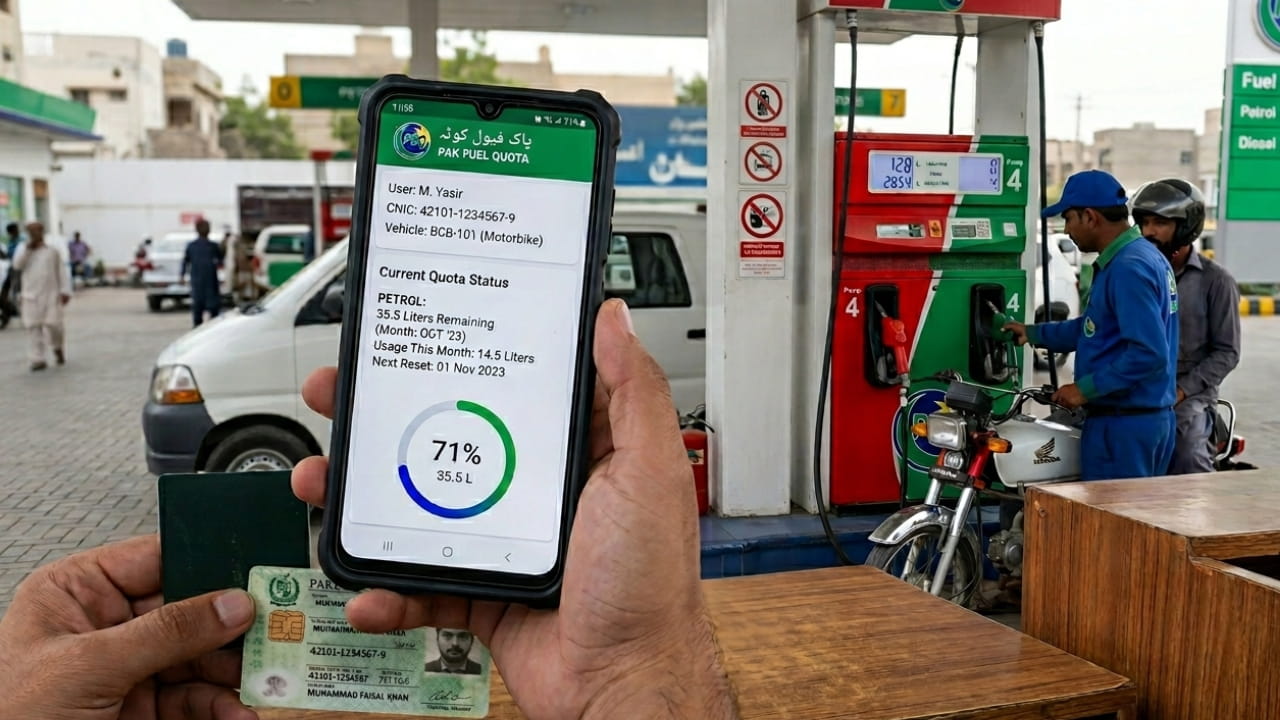
In a groundbreaking move to tackle the ongoing energy crisis and spiraling fuel costs, Pakistan's government has finalized a quota-based fuel distribution system for low-income motorists through a mobile application platform. The system is currently awaiting cabinet approval before nationwide rollout. This digital revolution in fuel management marks a major shift from traditional subsidy models to a technology-driven, targeted approach.
What Is the Digital Fuel Quota System?
Under the system, vehicle-specific quotas will be linked to a user's Computerised National Identity Card and registration number. This is designed as a smart way to ensure everyone gets their fair share of fuel at subsidized rates, without room for manipulation or misuse.
Step 1: Registration
The proposed app will require consumers to register by entering their vehicle registration number and national identity card details. This one-time registration connects your identity to your vehicle and determines your monthly fuel allowance.
Step 2: Digital Vouchers
Users will generate a digital voucher through the app, while retailers will scan or enter the voucher, leading the system to auto-validate the available quota. Each time you need fuel, you simply open the app and create a digital token.
Step 3: Smart Dispensing
A user requesting 20 litres of fuel with an authorized quota of 15 litres will only be supplied the eligible quantity. The system automatically prevents exceeding your allocated amount, keeping things fair for everyone.
Why Is Pakistan Implementing This System?
The government faces mounting pressure from multiple directions, and this digital solution addresses several critical challenges.
1. Skyrocketing Fuel Prices
In March 2026, petrol prices saw a staggering increase, driven largely by regional tensions and the blockade of the Strait of Hormuz. These dramatic price jumps have hit ordinary citizens hard, especially daily wage earners and small business owners.
2. Massive Financial Burden
Officials estimate that keeping petrol and diesel rates unchanged for two consecutive weeks has imposed a fiscal burden of about Rs70 billion. The government has been bleeding money trying to keep fuel affordable through blanket subsidies. Even more concerning, the federal government has already provided around Rs100 billion in fuel subsidies benefiting consumers across the country. This massive expenditure is simply unsustainable without reform.
3. Rising Consumption Despite High Prices
Perhaps the most troubling trend is that fuel usage has continued to increase despite higher prices. This counterintuitive pattern shows that blanket subsidies benefit everyone equally, including those who can afford to pay market rates.
4. Global Energy Crisis
Energy supply risks have intensified due to shipping disruptions in the Strait of Hormuz, a critical artery for global oil trade. Pakistan must prepare for potential supply shortages while managing existing resources more efficiently.
Key System Features
- Target Beneficiaries: Two-wheelers, three-wheelers (rickshaws), and possibly 800cc vehicles
- Proposed Monthly Quota: 20 litres for motorcycle users
- Registration Requirements: CNIC and vehicle registration number
- Technology Partners: OGRA, Ministry of Finance, Ministry of Petroleum, Ministry of IT and Telecom
- Participating Pumps: 12,000+ petrol stations nationwide
Who Will Benefit from Subsidized Fuel?
The app-based system targets those who need help the most. The government has finalized a mobile application-based quota system for fuel for two- and three-wheelers, which may possibly include up to 800cc vehicles. This means:
- Motorcycle owners, who form the backbone of Pakistan's daily commuters
- Rickshaw drivers, who depend on affordable fuel for their livelihoods
- Possibly small car owners with vehicles up to 800cc (decision still pending)
Officials are considering a monthly petrol quota of 20 litres for motorcycle users, providing meaningful relief to those who need it most.
Technical Details: How the System Works
For Consumers
Eligible consumers will download a dedicated mobile application where they will register their vehicles using their Computerized National Identity Card and vehicle registration numbers. Based on assessed usage patterns and availability, each user would be allocated a daily or monthly petrol quota that could be purchased within specified limits.
For Petrol Stations
Petrol stations will be required to maintain at least two dedicated mobile devices to run the system. The Ministry of Information Technology and Telecommunication is coordinating with handset manufacturers to provide specialized devices at an estimated Rs36,000 per unit. Operational guidelines will also require filling stations to assign specific dispensers or nozzles for subsidized fuel transactions involving two- and three-wheelers.
Monitoring and Accountability
All oil marketing companies will also be required to appoint focal persons for each retail site for seamless operations of the scheme and provide their contact details to OGRA for round-the-clock monitoring. Authorities have warned that any attempt to misuse the digital vouchers or bypass the app-based verification will result in the immediate suspension of the retail outlet's license.
| Aspect | Details |
|---|---|
| Registration<\/td> | CNIC and vehicle registration number linked to app<\/td> |
| Quota Allocation<\/td> | Based on vehicle type and usage patterns<\/td> |
| Voucher Generation<\/td> | Digital token created through app before purchase<\/td> |
| Verification<\/td> | Retailer scans voucher, system validates quota<\/td> |
| Dispensing<\/td> | System prevents exceeding allocated amount<\/td> |
| Monitoring<\/td> | OGRA and focal persons for round-the-clock oversight<\/td> |
Current Status and Timeline
Officials said the digital system has been technically finalized following joint testing by the Oil and Gas Regulatory Authority, the Ministry of Finance, the Ministry of Petroleum, and the Ministry of Information Technology and Telecommunication, clearing the project for cabinet-level approval.
The Ministry of Information Technology and Telecom has developed the application, which is currently in its testing phase. Authorities plan to roll it out nationwide after completing the trial process and receiving final cabinet approval.
Long-Term Impact and Benefits
Targeted Relief
The proposed mechanism is designed to deliver targeted fuel subsidies to the low-income segment while using controlled allocations to curb consumption amid mounting supply and fiscal pressures. Unlike blanket subsidies that benefit everyone equally, this system ensures government money reaches those who genuinely need support.
Transparency and Efficiency
Officials say the mobile app-based fuel system is being fast-tracked to ensure better control, transparency, and efficiency in fuel distribution. Every transaction is tracked digitally, eliminating opportunities for corruption and ensuring accountability at every level.
Data-Driven Policy Making
The system will provide valuable real-time data on consumption patterns, helping authorities make informed decisions about energy policy and resource allocation.
Provincial Cooperation
The government is now engaging provincial administrations to contribute to the subsidy framework to ease pressure on federal finances. Officials said the prime minister will also take the president into confidence regarding both the proposed fuel quota mechanism and the plan to broaden provincial participation in subsidy financing. This collaborative approach ensures the burden does not fall solely on federal shoulders.
Financial Impact
- Subsidy Burden So Far: Rs100 billion provided in fuel subsidies
- Two-Week Fiscal Burden: Rs70 billion to keep prices unchanged
- Expected Savings: Significant reduction through targeted subsidies
- Device Cost Per Pump: Rs36,000 for specialized mobile devices
Challenges and Concerns
While the system promises many benefits, some challenges remain:
- Technology Access: Not everyone owns a smartphone or has technical literacy, particularly in rural areas and among older citizens.
- Implementation Complexity: Approximately 12,000 petrol pumps across Pakistan will participate, requiring massive coordination and infrastructure upgrades.
- Potential for Black Markets: There are concerns that some may attempt to game the system by purchasing subsidized fuel and reselling it at market rates.
- Integration Requirements: The system's success depends on seamless integration of NADRA databases with the fuel retail network to prevent identity fraud.
What This Means for Average Citizens
For motorcycle owners and rickshaw drivers, this system represents much-needed relief. Instead of facing the full brunt of international oil price fluctuations, you will have access to a guaranteed monthly quota at subsidized rates.
For car owners, especially those with vehicles above 800cc, you may need to pay market rates. However, this ensures that government resources are directed where they are needed most.
For Pakistan's economy overall, this represents a crucial step toward fiscal sustainability. By replacing expensive blanket subsidies with targeted assistance, the government can maintain support for vulnerable groups without bankrupting the national treasury.
The Bigger Picture
This digital fuel quota system is more than just an app. It is a fundamental reimagining of how Pakistan manages vital resources. By leveraging technology to ensure fairness, transparency, and efficiency, the government is setting a new standard for public service delivery.
The proposed mechanism is designed to deliver targeted fuel subsidies to the low-income segment while using controlled allocations to curb consumption amid mounting supply and fiscal pressures. In a world of limited resources and unlimited demands, this smart approach ensures that help reaches those who need it most.
As Pakistan faces an uncertain energy future marked by global instability and rising costs, this digital innovation offers a path forward, one that balances compassion for struggling citizens with the hard realities of economic management. The app-based fuel quota system represents Pakistan's commitment to using modern technology for the public good, ensuring that in challenging times, the most vulnerable members of society are not left behind.
Frequently Asked Questions
What is the digital fuel quota system?
It is a mobile application-based system that links fuel quotas to a user's CNIC and vehicle registration number, ensuring targeted subsidized fuel distribution to low-income motorists.
Who will benefit from this system?
The system primarily targets motorcycle owners, rickshaw drivers, and possibly owners of 800cc vehicles.
How much fuel quota is proposed?
Officials are considering a monthly petrol quota of 20 litres for motorcycle users.
When will the system be launched?
The system has been technically finalized and is awaiting cabinet approval. A nationwide rollout is expected after the testing phase and final approval.
How does the system prevent misuse?
Every transaction is digitally tracked and verified. The system automatically prevents exceeding allocated quotas, and any misuse can result in license suspension for retail outlets.
Will I need a smartphone to use this system?
Yes, the system requires a mobile application. However, the government is working on accessibility solutions for those without smartphones.
Final Thoughts
The digital fuel quota system marks a historic shift in Pakistan's approach to energy management and social welfare. By moving from blanket subsidies to targeted, technology-driven relief, the government is demonstrating a commitment to both fiscal responsibility and social justice.
While implementation challenges remain, the potential benefits are enormous. For millions of low-income motorists, this system promises reliable access to affordable fuel. For the nation's economy, it offers a path toward sustainable subsidy management. And for Pakistan's digital future, it represents a bold step toward leveraging technology for public good.
Stay tuned for official announcements about the app's launch date and registration process once cabinet approval is granted. This is a historic moment in Pakistan's journey toward smarter, fairer governance.
Share this Current Affairs Update:
Leave a Comment
Your feedback is important to us. Submitted comments are kept private and are for internal review only.