Pakistan's Textile Titans Step Up: APTMA Proposes $2 Billion Lifeline as UAE Deposit Returns
Published by VerseZip Business Desk
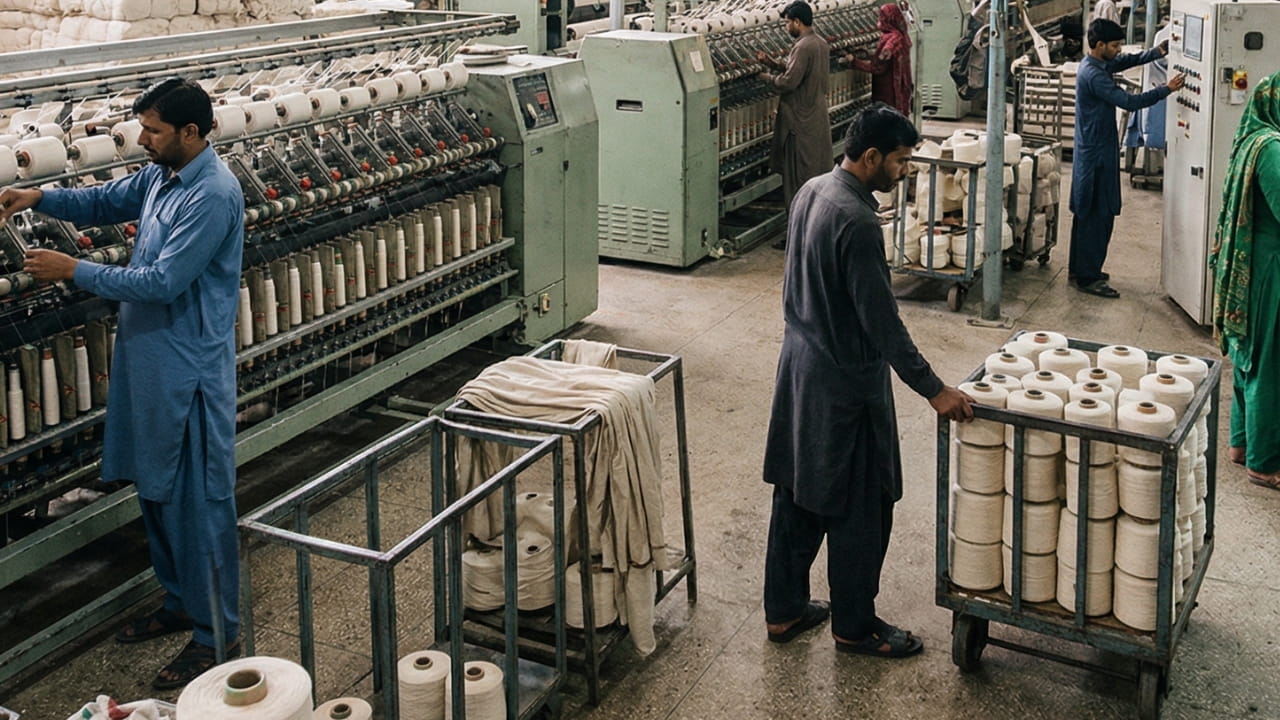
In a remarkable display of public-private partnership, Pakistan's textile sector, the backbone of the country's exports, has signaled its readiness to step in where foreign deposits are stepping out.
As the government prepares to honor its commitment to return a $2 billion safe deposit to the United Arab Emirates by the end of this month, the All Pakistan Textile Mills Association has come forward with a bold counter-offer: a voluntary $2 billion fund deposited with the State Bank of Pakistan to ensure no financial void emerges.
The Core of the Offer: Industry as a Safety Net
In a statement issued from Lahore, APTMA Chairman Kamran Arshad confirmed that leading industrial stakeholders are actively considering the formation of a $2 billion stability fund. But this is not a loan, nor is it a bailout request. The proposal involves industry members voluntarily depositing this massive sum with the central bank as a supportive measure. Arshad emphasized that the textile sector stands shoulder to shoulder with the government and will not allow any financial difficulty to emerge as Pakistan navigates its external repayment obligations.
"We stand with the government and will not allow any economic setback. Pakistan comes first for us," Arshad stated, underscoring the industry's commitment to national economic resilience.
Pakistan's External Repayment Schedule (April 2026)
| Obligation | Amount | Due Date | Status |
|---|---|---|---|
| Eurobond Repayment | $1.43 billion | April 7, 2026 | Settled (one day ahead) |
| UAE Safe Deposit Return | $2 billion plus ~6% interest | April 17, 2026 | Pending |
Total national reserves: ~$21.79 billion (SBP reserves: $16.38 billion as of late March)
Why Now? Understanding the UAE Repayment
To understand why the textile industry is making this move, you need to look at Pakistan's external repayment calendar for April 2026. Pakistan has decided to return the UAE's $2 billion deposit, along with accrued interest, by the end of this month. These funds had been maintained at the SBP as a safe deposit under bilateral commercial agreements.
According to financial reports, the repayment schedule for April is substantial. With total national reserves hovering around $21.79 billion, any large outflow naturally invites scrutiny. However, the Foreign Office has clarified that this is a routine financial transaction and dismissed misleading and unfounded commentary suggesting otherwise.
A Vote of Confidence: The Pakistan First Principle
What makes this development truly unique is the spirit behind it. APTMA has consistently upheld the principle of putting Pakistan first. Rather than viewing the UAE withdrawal as a crisis, the textile industry sees it as an opportunity to demonstrate patriotism through practical financial support.
Kamran Arshad further noted that following ongoing peace and economic discussions, representatives of the association plan to meet Prime Minister Shehbaz Sharif to work out a formal solution. The meeting aims to transform this industry proposal into a structured, actionable plan.
The Macroeconomic Backdrop: Why Exports Are Rising
The textile industry's confidence is not blind optimism. APTMA points to tangible improvements in the economic landscape.
1. IMF Conditions Fulfilled
Pakistan has successfully met all conditions set by the International Monetary Fund. The government has assured the lender of maintaining tight monetary policy and stands ready to adjust interest rates if needed to control inflation amid global uncertainties.
2. Export Growth Momentum
Exports are rising rapidly, strengthening the country's economic outlook. The textile sector, in particular, has benefited from recent government incentives.
3. Policy Support for Textiles
The government has already implemented several pro-export measures:
- Export Refinance Scheme rate slashed by 300 basis points to 4.5% (down from 7.5%), significantly lowering working capital costs for textile exporters
- Industrial power tariffs reduced by approximately Rs4 per kilowatt-hour
- Electricity wheeling charges rationalized to below Rs9 per unit
These measures have improved margins, liquidity, and competitiveness for textile manufacturers. With value-added textile exports currently around $18 billion, industry leaders believe $30 billion is achievable within five years if policies remain consistent.
Government Support for Textile Exports
Export Refinance Scheme
Rate reduced from 7.5% to 4.5% (300 basis points cut)
Industrial Power Tariff
Reduced by approximately Rs4 per kilowatt-hour
Electricity Wheeling Charges
Rationalized to below Rs9 per unit
Export Target
Current: ~$18 billion | Target: $30 billion in 5 years
What Happens Next? The Road Ahead
| Timeline | Expected Action |
|---|---|
| Mid-April 2026 | UAE $2 billion repayment executed |
| April-May 2026 | APTMA delegation meets Prime Minister to formalize fund mechanism |
| May 2026 | IMF team visits Pakistan for budget consultations |
| June 1, 2026 | Federal budget presented in parliament |
Finance Minister Muhammad Aurangzeb, who is heading to Washington for IMF and World Bank Spring Meetings from April 13 to 18, has been actively consulting with business leaders on tax rationalization and energy costs to boost export competitiveness.
Frequently Asked Questions
Is the textile industry actually giving the government $2 billion?
The proposal involves industry members depositing $2 billion with the State Bank of Pakistan as a fund, not as a donation or grant. The exact mechanism is still being discussed, and APTMA plans to meet the Prime Minister to finalize the details.
Why is Pakistan returning the UAE's $2 billion?
The funds were placed with the SBP under bilateral commercial agreements as safe deposits. Their maturity has arrived, and Pakistan is honoring the mutually agreed terms. The Foreign Office calls this a routine financial transaction.
Is Pakistan facing a foreign exchange crisis because of this repayment?
Not according to official statements. While the repayment is substantial, Pakistan had already settled a $1.43 billion Eurobond ahead of schedule on April 7. The Foreign Office has dismissed misleading reports suggesting the repayment is linked to geopolitical tensions.
How strong is Pakistan's textile industry right now?
The industry is gaining momentum. Export financing rates have dropped to 4.5%, energy costs have been reduced, and the government is actively consulting with businesses on further tax rationalization. Industry leaders believe value-added textile exports can grow from $18 billion to $30 billion over five years.
What does Pakistan First mean in this context?
APTMA Chairman Kamran Arshad used this phrase to emphasize that the textile industry prioritizes national economic stability over narrow business interests. The $2 billion fund proposal is a practical demonstration of this principle.
When will APTMA meet the Prime Minister?
The association plans to meet Prime Minister Shehbaz Sharif after ongoing peace and economic discussions are concluded. The meeting will aim to work out a formal, structured solution for the proposed fund.
Key Takeaways
| Aspect | Summary |
|---|---|
| The Offer | APTMA proposes $2 billion industry fund deposited with SBP |
| The Reason | To provide support as Pakistan repays UAE's $2 billion deposit |
| The Spirit | "Pakistan First" – industry prioritizing national stability |
| The Backdrop | Exports rising, IMF conditions met, policy support for textiles |
| Next Step | APTMA to meet PM Shehbaz Sharif for formalization |
| Official Stance | UAE repayment is routine; no crisis, no geopolitical link |
The Bottom Line
The APTMA's $2 billion offer is more than just a financial transaction. It is a powerful signal that Pakistan's private sector believes in the country's economic trajectory.
While the UAE repayment is proceeding as a routine financial obligation, the textile industry's willingness to backfill that liquidity demonstrates confidence in the government's policies and Pakistan's future stability.
As Kamran Arshad put it, the industry will not allow any disruption, and for now, they are backing those words with billions of rupees in proposed support.
Share this Business Update:
Leave a Comment
Your feedback is important to us. Submitted comments are kept private and are for internal review only.