KSE-100 Sheds 3,600 Points: How IMF Talks and Middle East Tensions are Rattling the PSX
Published by VerseZip Business Desk
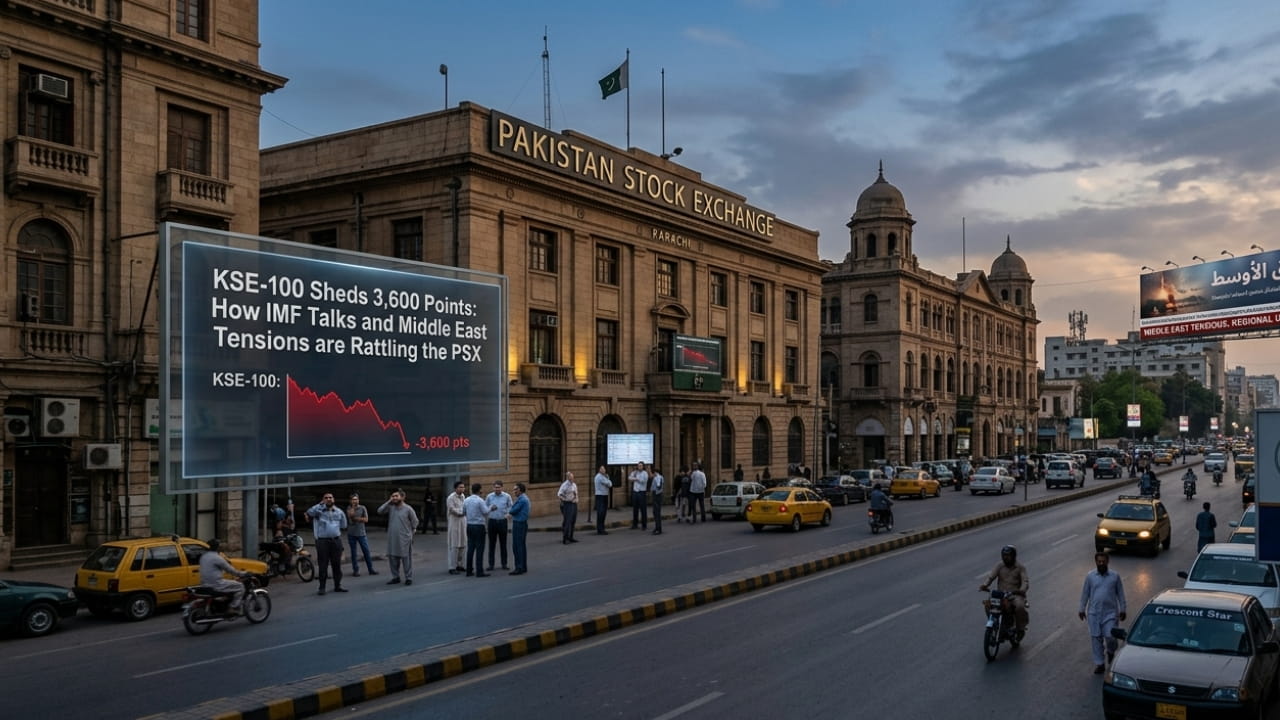
The trading floor of the Pakistan Stock Exchange (PSX) witnessed a deeply turbulent week. Swept up in a wave of domestic and international uncertainty, investors adopted a highly cautious "wait-and-watch" approach, leading to a significant market correction.
By the end of the trading week, the benchmark KSE-100 index shed a massive 3,600 points, ultimately closing at 153,866 points. This sharp decline wiped out substantial market capitalization, leaving retail investors and institutional funds scrambling to protect their portfolios. But what exactly is causing this sudden lack of confidence in an otherwise recovering market? Financial experts point to two massive, unavoidable factors.
The IMF Review: A Cloud of Economic Uncertainty
Locally, the primary catalyst for the market's downward spiral is the ongoing review talks with the International Monetary Fund (IMF). As government officials and IMF representatives sit down to evaluate Pakistan's economic performance, the market hates nothing more than unpredictability.
Investors are acutely aware that the IMF often demands strict fiscal discipline. There are widespread rumors in the financial sector regarding potential hikes in energy tariffs, new taxation measures on corporate dividends, and tighter monetary policies to meet the review's stringent conditions. Until a clear, official statement is released confirming the success of these talks, the big players are choosing to pull their capital to the sidelines rather than risk sudden policy shocks.
"Markets run purely on sentiment. Right now, that sentiment is tightly gripped by caution. Between the strict IMF targets at home and the geopolitical unrest abroad, institutional investors are naturally executing a flight to safety."
Middle East Tensions Rattle Global Confidence
While domestic policies weigh heavy, the international climate is adding massive fuel to the fire. Escalating and unpredictable geopolitical tensions in the Middle East have deeply rattled global market confidence.
For an import-dependent economy like Pakistan, any instability in the Middle East immediately sparks fears of a global oil price surge. If international crude oil becomes more expensive, it directly translates to higher domestic inflation, increased production costs for local industries, and a heavier import bill. Recognizing this domino effect, investors at the PSX engaged in heavy profit-taking across key sectors, specifically in cement, commercial banking, and energy stocks.
Market Summary at a Glance:
- KSE-100 Closing: Settled at 153,866 points.
- Weekly Loss: The index shed over 3,600 points overall.
- Primary Domestic Factor: Uncertainty surrounding the strict conditions of the ongoing IMF review talks.
- Primary Global Factor: Escalating tensions in the Middle East threatening global oil prices and supply chains.
What Should Investors Do Next?
Financial advisors are urging the public to avoid panic selling. While a 3,600-point drop sounds alarming, seasoned brokers note that market corrections are a healthy and expected part of the economic cycle, especially after periods of rapid growth.
The fundamental structures of many blue-chip companies listed on the PSX remain highly profitable and resilient. Once the IMF talks conclude successfully and clarity returns to the economic roadmap, analysts expect the market to bounce back with renewed vigor. Until then, patience and careful stock selection remain the best strategies.
Share this Financial Update:
Leave a Comment
Your feedback is important to us. Submitted comments are kept private and are for internal review only.