Pakistan Electricity Crisis 2026: Why Your Bills Are Up 155% and Is Solar Still Worth It?
Published by VerseZip Business Desk
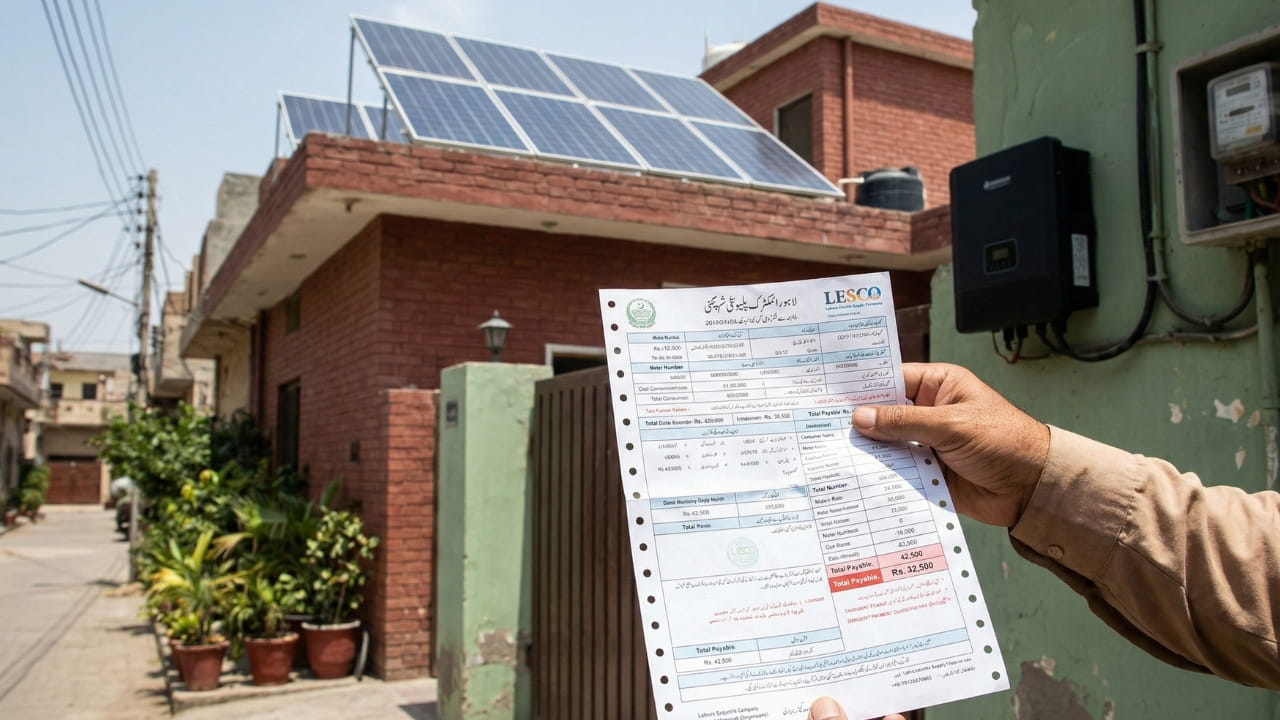
If you have opened your recent electricity bill in Pakistan, you probably did not need a report to tell you things are bad. But the numbers are finally out, and they confirm what every household in Lahore, Karachi, and Islamabad is feeling. The financial heat is unbearable.
The Competition Commission of Pakistan has just released a bombshell report revealing that power tariffs have skyrocketed by a staggering 155 per cent in just three years.
But here is the twist no one saw coming. While the government is raising rates, millions of Pakistanis are fighting back by going off-grid. We have dug through the latest CCP data, market trends, and the new Net Metering rules to answer the only questions that matter: Why did this happen? How do I survive it? And is solar still the answer in 2026?
Why Did Pakistan's Electricity Price Increase by 155%? The Real Reasons
You might think the price of fuel is the only culprit, but the CCP report points to three specific factors driving the increase.
Three Drivers of the Price Hike
- The Capacity Payment Trap: Even if Pakistan stops using a power plant entirely, the government still has to pay the private owners for just existing. These capacity charges, often in US dollars, have become a massive financial anchor. We are paying for power we do not even use.
- The Rupee Depreciation: Most of our energy infrastructure is built on loans and machinery priced in US Dollars. As the Pakistani Rupee weakened against the Dollar over the last three years, the cost of maintaining these plants exploded. This debt servicing cost is directly passed on to your bill.
- The End of Subsidies: Under pressure from global lenders, the government has systematically removed subsidies. The result is that the actual cost of generation is now hitting your wallet raw. In some areas, people are reporting that their monthly bill is now higher than their monthly rent.
The Solar Revolution: 35 GW and Counting
The CCP report reveals a fascinating silent revolution. While the government struggles with the grid, the people have taken charge. Pakistan has imported over 50 GW of solar panels in recent years, with an installed capacity estimated at 35 GW. Pakistan is now the third-largest destination for Chinese solar exports. Why? Because panels got cheap just as electricity got expensive. On any given sunny day, a massive chunk of Pakistan's industry and housing societies are running independently of the national grid.
Solar Revolution: Key Numbers
The Net Metering Trap: What Changed in 2026
This is the most important part for anyone planning to install solar. The CCP and NEPRA have introduced the Prosumer Regulations 2026, moving from Net Metering to Net Billing.
| System | How It Works | Financial Impact |
|---|---|---|
| Old System (Net Metering) | 1 unit sent = 1 unit received for free (1-for-1 swap) | Maximum savings for solar users |
| New System (Net Billing) | Sell extra electricity at low wholesale rate (approximately Rs10-11 per unit), buy back at high retail rate (up to Rs40-60 per unit) | Solar is now a savings investment, not a money-making one |
The verdict: Solar is no longer a money-making investment where the government pays you. It is now a savings investment. Existing net metering users are mostly protected until their contracts expire. New users will see a longer payback period, around 5 to 8 years instead of 3.
Easy Comparison: Grid vs. Solar (2026 Costs)
| Feature | Grid Electricity | Solar Energy (2026) |
|---|---|---|
| Average Cost per Unit | PKR 35 to 60+ (slab based) | PKR 10 to 15 (amortized cost) |
| Price Increase Trend | +155% and rising | 0% (sun is free) |
| Return on Buy-Back | N/A (you pay full price) | PKR 10-11 (Net Billing rate) |
| Energy Independence | Low (load shedding varies) | High (daytime freedom) |
| Initial Investment | Zero (pay-as-you-go) | High (PKR 400,000 to 800,000 for a system) |
Frequently Asked Questions
Is solar worth it in Pakistan after the new net billing policy?
Yes, but only if you change your habits. Solar is still worth it for self-consumption. If you use heavy appliances such as ACs, motors, and washing machines during the daytime, solar will save you massive amounts of money. However, if you were relying on selling power back to the grid, your profits will shrink significantly under the new PKR 11 per unit buy-back rate.
Why is my electricity bill so high even when I use less?
You are likely a victim of fixed charges. The government has increased fixed monthly charges, also known as capacity charges, to offset the loss caused by solar users leaving the grid. Even if you sit in the dark, you now pay a higher connection fee just to keep the meter attached to your house.
What is the future of solar energy in Pakistan?
Off-grid and battery storage. Because the government lowered the buy-back rate, the market is now shifting toward batteries. People are storing their extra solar power in batteries to use at night instead of selling it cheaply to the grid. Hybrid systems are the future.
Is the quality of solar panels in Pakistan safe?
The CCP issued a warning about substandard equipment. Because of the rush to buy cheap panels, the market is flooded with B-grade and counterfeit Chinese panels. These degrade quickly and pose a fire risk. Always buy from Tier-1 brands like Longi, Jinko, or JA Solar, even if they cost a bit more.
Will electricity prices go down in Pakistan?
No. The CCP report indicates that due to climate change impacts including floods and heatwaves, and international debt obligations, energy costs are projected to stay high. Climate-related economic losses could reach 6 per cent of GDP by 2050, putting upward pressure on prices.
The Verdict: How to Survive the 155% Price Hike
The data is clear. The government cannot provide cheap electricity right now, and the people are leaving the grid.
If you are a non-solar user: You need to practice load management. Shift heavy usage like ironing or running the motor to off-peak hours if your meter allows. Or start saving for a small solar system immediately. Prices of components are currently soft.
If you are a solar user: Go hybrid. Stop exporting your power for PKR 11. Invest in lithium batteries to store your daytime power for evening use. This maximizes your savings and protects you from evening peak rates.
The 155 per cent hike is not just a number. It is a structural shift. Pakistan is moving from a centralized grid to a decentralized, solar-powered future, whether the planners like it or not.
Share this Business Update:
Leave a Comment
Your feedback is important to us. Submitted comments are kept private and are for internal review only.