Saudi Arabia Throws Pakistan a Financial Lifeline: Here's What the $5 Billion Support Really Means
Published by VerseZip Business Desk
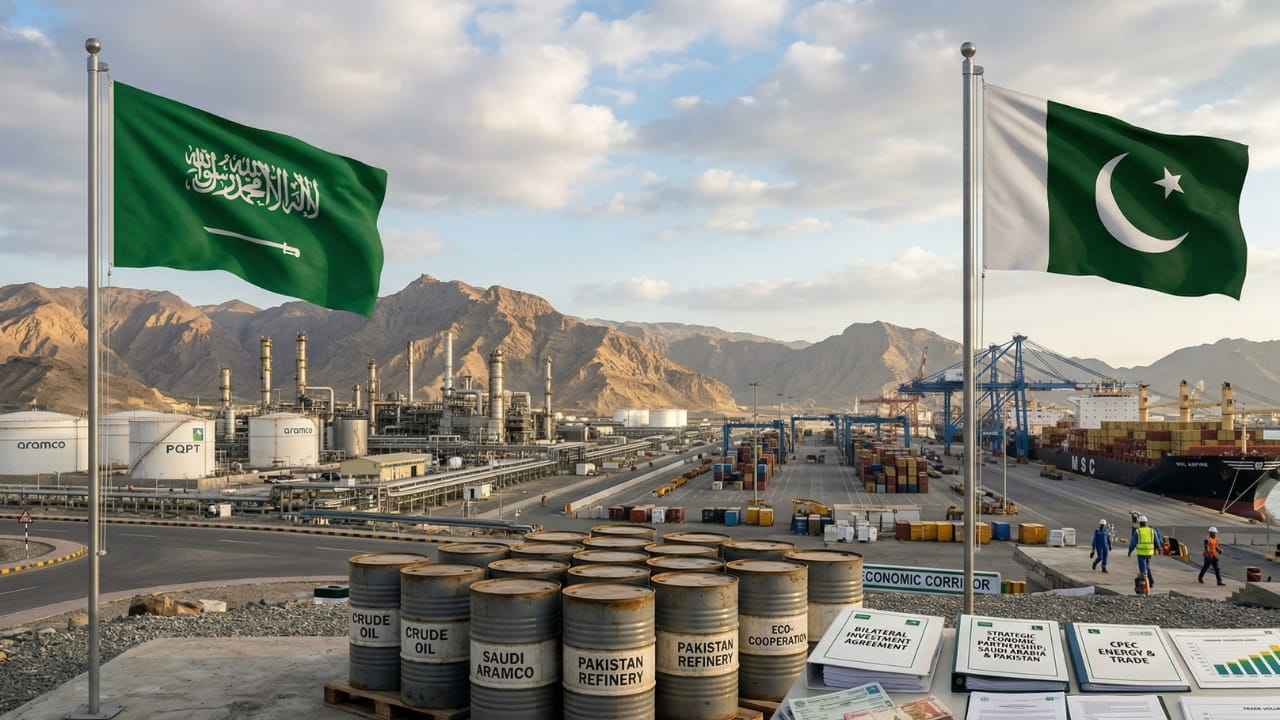
In a high-stakes diplomatic move that could shape Pakistan's economic future, Saudi Arabia has stepped forward with a firm promise of comprehensive financial support. The timing could not be more critical.
As Pakistan prepares to make nearly $5 billion in debt repayments this month, including a massive $3.5 billion owed to the United Arab Emirates, the Kingdom's assurance arrives like a lifeline in stormy seas.
The Meeting That Mattered
The assurance came during a high-level meeting in Islamabad between Prime Minister Shehbaz Sharif and Saudi Finance Minister Mohammed bin Abdullah Al-Jadaan. The visiting minister was in Pakistan for a one-day visit, and his presence alone sent a powerful signal.
According to officials familiar with the discussions, the Saudi finance minister reiterated the Kingdom's full financial support for Pakistan and expressed trust in Islamabad's role as a mediator in talks between the United States and Iran.
The meeting was not a small affair. Deputy Prime Minister and Foreign Minister Ishaq Dar, Chief of Defence Forces Field Marshal Syed Asim Munir, Finance Minister Muhammad Aurangzeb, and Petroleum Minister Ali Pervaiz Malik were all in attendance. This level of participation shows just how seriously Pakistan is taking these discussions.
What Exactly Is Pakistan Asking For?
Behind closed doors, Pakistan has put forward a substantial request package. Here is what Islamabad is seeking from Riyadh.
| Request | Details | Current Status |
|---|---|---|
| Fresh Loan | $5 billion loan, potentially converting existing deposit into 10-year facility | Under discussion |
| Oil Deferred Payment | 5-year extension of $1.2 billion annual facility; request to increase to $5 billion | Expires this month; extension requested |
| Cash Deposit | Double existing $5 billion deposit facility | Under consideration |
Why Now? The Perfect Economic Storm
To understand why this support is so crucial, you need to look at the numbers Pakistan is facing this month.
The $4.8 Billion April Wall
| Debt Component | Amount |
|---|---|
| UAE debt repayment | $3.5 billion |
| Eurobond maturity | $1.3 billion |
| UAE repayment installments | $450 million + $2 billion + $1 billion (scheduled dates) |
Total short-term foreign currency liabilities: ~$31.23 billion | Outflows due within next month: $6.20 billion
The UAE Factor
The situation with the UAE has added another layer of complexity. Unlike previous years when Abu Dhabi routinely rolled over its deposits, the UAE has recently been granting extensions for shorter durations, only one or two months at a time. This shift in behavior reportedly stems from heightened geopolitical tensions in the Middle East following the US-Israel conflict with Iran.
Pakistan has decided to take control of the situation by repaying the $3.5 billion rather than continuing to seek uncertain rollovers. Officials are also in talks to potentially convert part of this debt into investment, which could ease pressure on reserves while supporting long-term cooperation.
The Reserve Pressure
Without fresh inflows, officials fear that Pakistan's foreign exchange reserves could fall to around $11.5 billion. This would put significant pressure on the external account and make it harder for the country to finance imports.
For context, Pakistan's total short-term foreign currency liabilities stand at approximately $31.23 billion, according to the latest State Bank of Pakistan liquidity report. Outflows of $6.20 billion are due within the next month alone.
The Geopolitical Angle You Should Not Ignore
The Saudi finance minister's visit is about more than just money. There is a bigger geopolitical picture at play.
Pakistan as Mediator: Pakistan has emerged as a key mediator in talks between the United States and Iran, alongside Saudi Arabia, Egypt, and Turkey. The Saudi finance minister specifically reiterated the Kingdom's trust in Pakistan's mediating role, a significant diplomatic endorsement.
The Saudi-UAE Rift: The visit also highlights shifting alliances in the Gulf. The UAE and Saudi Arabia, once close partners, have seen relations cool in recent years due to disagreements over Yemen, Sudan, and the Horn of Africa. The UAE has sustained more Iranian attacks than any other country and has shown a more hawkish posture on Iran. Meanwhile, Saudi Arabia appears to be taking a different approach, one that involves Pakistan as a key partner.
The IMF Connection
Pakistan's financial stability is closely tied to its $7 billion International Monetary Fund program. Under this program, friendly countries have pledged to maintain $12.5 billion in deposits to support Pakistan's reserves.
The IMF is scheduled to review Pakistan's performance soon, with a successful review expected to unlock a $1.2 billion disbursement by late April 2026. This includes $1 billion under the Extended Fund Facility and $200 million via the Resilience and Sustainability Facility. Saudi Arabia's continued support will be viewed favorably by the IMF, as it demonstrates that Pakistan has reliable external partners willing to back its economic stability.
What Happens Next?
While the Saudi finance minister's visit was heavy on assurances, specific financial proposals were reportedly not finalized during the delegation-level meeting. However, Finance Minister Muhammad Aurangzeb had taken up the proposals with his Saudi counterpart two days prior to the prime minister's meeting.
The two finance ministers are expected to meet again on the sidelines of the upcoming World Bank Group-IMF Spring Meetings in Washington, D.C. This will be a crucial opportunity to finalize the details of the financial package.
Meanwhile, Pakistan continues to manage other external obligations. The government has already cleared a $1.4 billion Eurobond payment and is working to maintain reserve adequacy through a combination of repayments, rollovers, and fresh inflows.
| Event | Timeline | Expected Outcome |
|---|---|---|
| IMF-World Bank Spring Meetings | April 2026 (Washington, D.C.) | Finalize Saudi financial package details |
| IMF Review | April 2026 | Expected $1.2 billion disbursement ($1bn EFF + $200mn RSF) |
| UAE Debt Repayment | April 2026 | $3.5 billion to be repaid in installments |
How Does This Affect the Common Pakistani?
For the average citizen, Saudi financial support translates into several real-world benefits.
- Stable Currency: Stronger reserves help the State Bank of Pakistan defend the rupee against volatility.
- Controlled Inflation: A stable exchange rate keeps imported goods, from food to medicine, affordable.
- Uninterrupted Oil Supply: The deferred payment facility ensures that Pakistan can continue importing oil without immediate cash pressure.
- IMF Program Continuation: Saudi support helps Pakistan meet IMF conditions, keeping the bailout program on track and preventing economic derailment.
- Investor Confidence: Strong bilateral support signals to other investors and lenders that Pakistan has reliable partners, encouraging further investment.
Frequently Asked Questions
How much financial support has Saudi Arabia actually committed to Pakistan?
Saudi Arabia has assured comprehensive financial support, but specific dollar amounts have not been finalized in writing yet. Pakistan has requested a $5 billion loan and a five-year extension of the $1.2 billion annual oil financing facility. The details are expected to be discussed further at the upcoming IMF-World Bank Spring Meetings in Washington.
Why is Pakistan repaying $3.5 billion to the UAE?
Pakistan has decided to repay the $3.5 billion debt to the UAE rather than continue seeking uncertain rollovers. The UAE has recently been granting only short-term extensions of one to two months, reportedly due to heightened geopolitical tensions in the Middle East. Repaying the debt reduces uncertainty and strengthens Pakistan's financial credibility.
How much total debt is Pakistan repaying in April 2026?
Pakistan is scheduled to repay approximately $4.8 billion in April 2026. This includes $3.5 billion owed to the United Arab Emirates in three installments and a $1.3 billion Eurobond maturity.
What is the Saudi oil financing facility?
The Saudi oil financing facility allows Pakistan to purchase oil from Saudi Arabia without paying upfront. It acts as a line of credit for oil imports. The current facility is approximately $1.2 billion per year and is set to expire in April 2026. Pakistan has requested a five-year extension.
How does this affect Pakistan's IMF program?
Saudi financial support is critical for Pakistan's $7 billion IMF program. Under the program, friendly countries have pledged to maintain $12.5 billion in deposits to support Pakistan's reserves. Continued Saudi support demonstrates to the IMF that Pakistan has reliable external partners, which helps keep the bailout program on track.
What is the current state of Pakistan's foreign exchange reserves?
According to the latest State Bank of Pakistan data, official reserve assets totaled approximately $28.36 billion as of February 28, 2026. However, Pakistan faces significant short-term foreign currency obligations of about $31.23 billion, making continued external support crucial.
The Bottom Line
Saudi Arabia has not yet signed on the dotted line for a specific dollar amount. But the political commitment is clear. The Kingdom's finance minister traveled to Islamabad personally to deliver the message. The Crown Prince has shown deep affection for Pakistan. And both sides are talking about expanding cooperation far beyond just loans.
For a country facing nearly $5 billion in debt repayments this month alone, that assurance is worth its weight in gold.
The coming weeks, particularly the IMF Spring Meetings in Washington, will determine how quickly the financial support translates into actual dollars in the State Bank's accounts. But for now, Pakistan can breathe a little easier knowing that its closest ally in the Gulf has its back.
Share this Business Update:
Leave a Comment
Your feedback is important to us. Submitted comments are kept private and are for internal review only.