Khyber Pakhtunkhwa Announces New School Timings: Classes to Start Earlier, Moral Education Becomes Mandatory
Published by VerseZip Education Desk
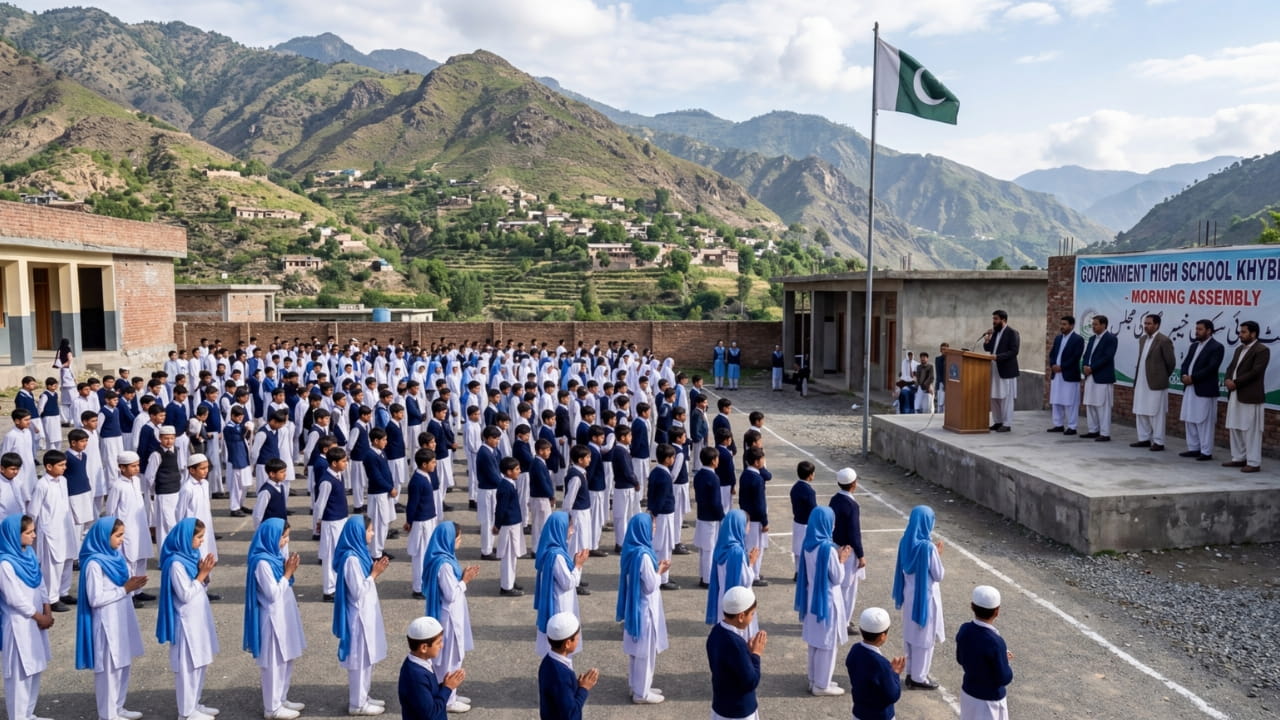
Parents, teachers, and students across Khyber Pakhtunkhwa need to reset their morning alarms. The provincial government has just released a completely new timetable for all public schools, bringing significant changes to both school hours and what happens inside the classroom.
The government of Khyber Pakhtunkhwa has officially announced a revised school schedule that will affect thousands of public schools across the province. The notification, issued by the Education Department, introduces earlier start times, mandatory moral training during assemblies, and weekly literary sessions.
The move is being described as an effort to make better use of morning hours, instill ethical values in students, and give teachers dedicated time for administrative work.
What Are the New School Timings?
The most immediate change for families is the shift in school hours. Under the new schedule, primary schools will start at 7:30 AM and close at 1:35 PM. This means the school day will run for approximately six hours and five minutes, including assembly time, recess, and class periods.
Previously, many schools in KP had later start times, often beginning around 8:00 AM or 8:30 AM. The new 7:30 AM start is significantly earlier, particularly for younger children in primary grades.
| School Level | New Start Time | New Closing Time | Total Duration |
|---|---|---|---|
| Primary Schools | 7:30 AM | 1:35 PM | 6 hours 5 minutes |
Why the Earlier Start Time?
While the official notification does not explicitly state the reasoning, education experts point to several potential benefits:
- Cooler morning hours: Especially important in the summer months, earlier starts allow students to learn in more comfortable temperatures before the afternoon heat sets in.
- Better alignment with parental work schedules: Many parents begin work early. An earlier school start can reduce the gap between drop-off and work start times.
- More daylight for extracurricular activities: Ending at 1:35 PM leaves the afternoon free for homework, sports, and family time.
Big Changes to Morning Assemblies
The new timetable does more than just shift hours. It completely reimagines what happens during morning assembly. Previously, assemblies in many schools were brief, often just a prayer, the national anthem, and a few announcements. The new rules make assemblies more structured and educational.
Mandatory Components of Assembly
According to the notification, every morning assembly must now include:
- Moral training: Students will receive guidance on ethics, honesty, respect, and civic responsibility.
- Speeches on various topics: Students or teachers will deliver short speeches covering current affairs, historical events, scientific discoveries, or social issues.
- Practical activities: These may include demonstrations, group exercises, or hands-on learning moments.
Moral Education Delivery Format
Three Days Per Week
Moral education delivered through speeches by students or teachers on specific ethical themes.
Three Days Per Week
Moral education delivered through skits, short plays or role-plays demonstrating real-life scenarios.
Weekly Literary Sessions: Introducing Bazm-e-Adab
One of the most culturally rich additions to the school week is the introduction of Bazm-e-Adab, a literary session. The term translates roughly to gathering of literature or literary circle. These are traditional South Asian gatherings where poetry, prose, essays, and other literary works are shared, discussed, and appreciated.
School heads have been instructed to organize Bazm-e-Adab on the last working day of each week, typically Friday in most Pakistani schools. Traditional literary sessions typically include students reciting poetry in Urdu, Pashto, or English, reading and discussing short stories, sharing original essays or creative writing, learning about famous poets and writers, and debates or discussions on literary topics.
Teacher Administration Time: The Final Three Periods
The new timetable also carves out dedicated time for teachers to complete administrative work, a need that has long been expressed by educators. Following the weekly literary session, the final three periods of the day will be reserved for staff meetings where teachers discuss student progress, share best practices, address challenges, and coordinate on school-wide initiatives, as well as completion of registers including attendance records, grade books, lesson plan logs, and other required documentation.
| School Day Segment | Activities | Duration |
|---|---|---|
| Morning Assembly | Prayer, National Anthem, Moral Training, Speeches, Skits, Practical Activities | Approximately 30 minutes |
| Regular Classes | Standard subject instruction | Multiple periods |
| Bazm-e-Adab (Weekly) | Poetry recitation, story sharing, literary discussions | Last working day of week |
| Final Three Periods | Staff meetings, register completion, administrative tasks | Dedicated teacher time |
Addressing Teacher Shortages
Like many education systems around the world, KP's public schools sometimes face teacher shortages due to long-term leaves, unfilled positions, or unexpected absences. The new notification addresses this head-on by clearly stating that in cases of teacher shortages or long-term leave, school heads and subject specialists will take classes.
This means school heads, typically principals, are expected to step into the classroom when needed, and subject specialists with expertise in specific subjects will cover classes in their areas of expertise. This provision ensures that student learning is not disrupted even when regular classroom teachers are unavailable, while also making school leadership more directly accountable for educational outcomes.
Enforcement and Oversight
A policy is only as good as its implementation. The KP Education Department has made it clear that compliance is not optional. All District Education Officers across the province have been directed to ensure strict implementation of the new timetable in schools under their jurisdiction.
District Education Officers are expected to conduct surprise visits to schools to verify that the new schedule is being followed, review assembly records to ensure moral training, speeches, and skits are actually happening, check that Bazm-e-Adab is being held weekly, verify that teacher meetings and register completion are taking place during the final three periods, and take disciplinary action against schools that fail to comply.
Key Changes at a Glance
- New Start Time: 7:30 AM for primary schools
- New Closing Time: 1:35 PM
- Moral Training: Mandatory during morning assembly through speeches and skits
- Bazm-e-Adab: Weekly literary session on the last working day
- Teacher Administrative Time: Final three periods for staff meetings and register completion
- Teacher Shortage Protocol: School heads and subject specialists to cover classes
- Enforcement: District Education Officers to ensure strict compliance
What This Means for Parents and Students
For Parents
- Earlier drop-offs: If your child attends primary school, you will need to have them at school by 7:30 AM, meaning waking up 30 to 60 minutes earlier than before.
- Afternoon pick-ups at 1:35 PM: The school day ends earlier than some parents may be used to, requiring adjustments to work schedules or alternative care arrangements.
- More engaged children: The focus on moral education and literary activities may lead to children talking more about what they learned in assembly or during Bazm-e-Adab.
For Students
- More structure: The school day now has clearer segments including assembly with moral training, regular classes, weekly literary session, and teacher time.
- Opportunities to perform: Students who enjoy public speaking, acting, or poetry will have regular chances to showcase their talents during speeches and skits.
- Less lost instructional time: With teacher shortages being covered by school heads and subject specialists, fewer class periods will be wasted.
For Teachers
- Dedicated administrative time: No more staying late to fill out registers.
- Regular collaboration: Weekly staff meetings can help solve problems faster.
- Potential for more work: School heads and subject specialists may need to cover extra classes during shortages.
Frequently Asked Questions
What are the new school timings in Khyber Pakhtunkhwa?
Primary schools will now start at 7:30 AM and close at 1:35 PM. This applies to all public schools across the province.
Do these timings apply to all grades or only primary schools?
The notification specifically mentions primary schools. However, similar timings may apply to middle and high schools. Parents should confirm with their specific school or District Education Office.
What is mandatory during morning assembly now?
Every assembly must include moral training, speeches on various topics, and practical activities. This replaces the old brief assembly format.
How will moral education be delivered?
On three days per week through speeches, and on the other three days through skits. This schedule ensures variety and engagement.
What is Bazm-e-Adab?
Bazm-e-Adab is a literary session where students share poetry, stories, essays, and other creative writing. It will be held on the last working day of each week.
What happens during the final three periods of the day?
The final three periods are reserved for staff meetings and completion of registers, giving teachers dedicated administrative time.
Who will teach classes when a teacher is on long-term leave?
School heads and subject specialists will take over classes to ensure students do not miss learning time due to teacher shortages.
Will private schools also follow these timings?
The notification specifically applies to public schools. Private schools may follow similar timings voluntarily but are not legally bound unless a separate directive is issued.
How will the government ensure schools follow the new timetable?
District Education Officers have been directed to conduct surprise visits, review records, and take disciplinary action against non-compliant schools.
Final Thoughts: A Bold Step for KP's Schools
The Khyber Pakhtunkhwa government has taken a bold step with this new timetable. It is not just about changing hours. It is about changing what happens inside schools.
Earlier start times may be challenging for some families. But the addition of moral training, literary sessions, and dedicated teacher time addresses real gaps in the current education system.
Will it work? That depends on implementation. District Education Officers must follow through with strict oversight. School heads must embrace their new role as classroom teachers when needed. Parents must adjust routines.
But the direction is clear. KP wants schools that educate not just the mind, but also the character. And that is a goal worth waking up early for.
Sources: Notification from Government of Khyber Pakhtunkhwa Education Department; Statement by Education Minister Arshad Ayub Khan; KP Education Department official communications.
Share this Education Update:
Leave a Comment
Your feedback is important to us. Submitted comments are kept private and are for internal review only.