Rising School Costs in Pakistan 2026: Books, Uniforms, Transport, and Fees Hit Parents Hard
Published by VerseZip Education Desk
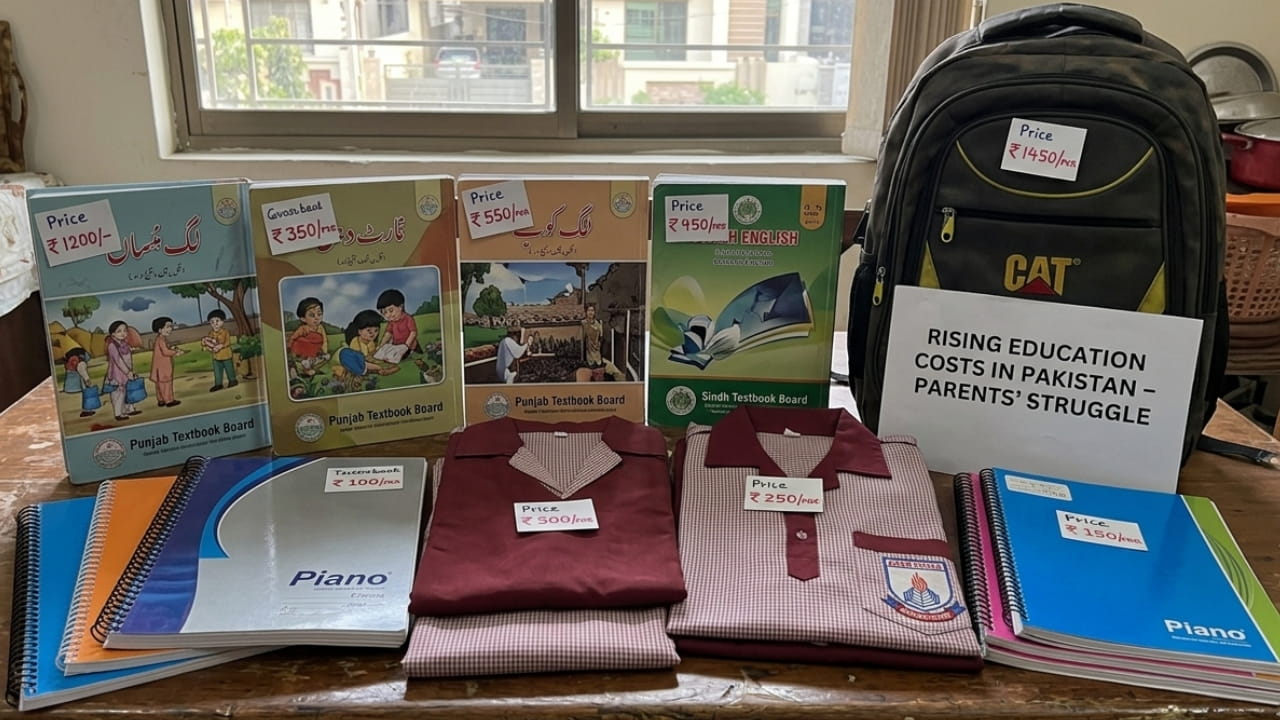
As the new academic session gets underway on April 1, many Pakistani parents are facing an unpleasant surprise. Education expenses that were already challenging have jumped sharply this year. From textbooks and notebooks to uniforms, school bags, and daily pick-and-drop van charges, almost every essential has become noticeably more expensive.
This increase is not sudden. It builds on years of inflation, rising import costs, and recent policy changes. Families across cities like Lahore, Karachi, Islamabad, and Rawalpindi are feeling the pressure, especially middle-class households with more than one child in school.
Why Textbook and Book Prices Have Increased Significantly
Booksellers have raised the prices of textbooks for classes 1 through matric by Rs100 to Rs500 per book or set, depending on the grade and subject. A full set that might have cost a few thousand rupees last year now feels significantly heavier on the pocket.
The main reasons are clear. Pakistan imports a large portion of its paper, and the cost of this raw material has climbed due to fluctuations in the dollar-rupee exchange rate and global supply chain issues. On top of this, in early 2026, the government increased regulatory fees for publishers. No Objection Certificate fees reportedly jumped from around Rs20,000 to Rs150,000, while license renewal fees rose from Rs5,000 to Rs75,000.
Publishers say they have no option but to pass these extra costs on to consumers. For many families, this means spending several thousand rupees more just to buy books for the new session.
Stationery Prices Climb: Notebooks, Colors, Geometry Boxes, and Calculators
Stationery shops have also adjusted their rates upward. Here is a breakdown of current prices compared to previous rates:
| Stationery Item | Previous Price (Rs) | Current Price (Rs) | Increase |
|---|---|---|---|
| Ordinary Notebooks | 80 - 100 | 150 - 250 | Up to 150% |
| Practical Notebooks (Matric Set) | 800 - 1,000 | 1,500 - 2,500 | Up to 150% |
| Geometry Boxes | 200 - 300 | 500 - 1,000 | Up to 300% |
| Scientific Calculators | 1,500 - 2,000 | 3,000 - 5,000 | Up to 150% |
| Colors, Markers, Drawing Materials | - | - | Approximately 70% higher |
Colors, markers, and drawing materials have seen one of the sharpest increases, nearly 70 per cent higher than before. These items rely on imported chemicals and plastics, so when raw material costs rise, the impact shows up quickly on shop shelves.
School Uniforms, Shoes, and Bags Now Cost More
Uniforms have become another major expense. Here is a comparison of current uniform and accessory prices:
| Item | Previous Price (Rs) | Current Price (Rs) | Increase |
|---|---|---|---|
| Complete Uniform Set | 1,800 - 2,500 | 3,500 - 5,000 | Up to 100% |
| School Shoes | 1,500 - 2,000 | 2,500 - 4,000 | Up to 100% |
| School Bag | 1,000 - 3,000 | 2,000 - 7,000 | Up to 130% |
These prices are higher partly because of increased fabric, electricity, and stitching costs. However, another massive issue is that many private schools insist on specific colors, designs, or embroidered logos, forcing parents to buy from designated shops instead of the cheaper open market.
The Competition Commission of Pakistan recently took notice of this practice, issuing show-cause notices to major private school systems for allegedly forcing parents to buy logo-branded items at prices 53 per cent to 280 per cent higher than similar items available elsewhere.
School Transport Charges Have Doubled
One of the biggest shocks comes from school van and pick-and-drop services. Transporters have increased monthly charges by 100 per cent to 150 per cent following recent fuel price hikes.
| Period | Monthly Cost (Rs) |
|---|---|
| Previous Cost | Approximately Rs3,000 |
| Current Cost | Rs6,500 to Rs7,000 or more |
This increase is directly linked to the surge in petrol and diesel prices. While public transport fares generally go up by smaller margins, school van operators, who make multiple short trips daily in heavy traffic, have passed on aggressive adjustments.
Private School Admission and Monthly Fees
Private schools have also adjusted their own charges. Here is a breakdown by school tier:
| School Tier | Admission Fee (Rs) | Monthly Fee (Rs) |
|---|---|---|
| Low-Tier Schools | Approximately Rs2,500 | Approximately Rs1,500 |
| Mid-Range Schools | Rs4,000 to Rs5,000 | Approximately Rs2,500 |
| Elite Private Schools | Rs8,500 to Rs10,000 or more | Significantly higher |
What Parents Can Do
- Compare prices at multiple local markets, such as Urdu Bazaar, before buying
- Consider second-hand uniforms and books where possible
- Form parent groups to negotiate transport rates collectively
- Report monopolistic designated shop practices to consumer courts or the Competition Commission of Pakistan
Frequently Asked Questions
Why have textbook prices increased so much in Pakistan for the 2026 academic year?
Textbook prices have surged by Rs100 to Rs500 per book due to two main factors: the rising cost of imported paper driven by currency devaluation, and a massive hike in government regulatory fees. In early 2026, publisher NOC fees jumped from Rs20,000 to Rs150,000, forcing publishers to pass these costs onto parents.
What is the current price of a school uniform in Pakistan (2026)?
As of April 2026, a standard school uniform costs between Rs3,500 and Rs5,000, compared to the previous average of Rs1,800 to Rs2,500. This price increase is driven by higher textile manufacturing costs and the practice of schools forcing parents to buy customized uniforms from designated shops.
How much are school van and transport fees in Pakistan right now?
School transport charges have increased by 100 per cent to 150 per cent for the 2026 academic year. A monthly pick-and-drop service that previously cost Rs3,000 now costs between Rs6,500 and Rs7,000. Transporters cite the recent severe hikes in petrol and diesel prices as the primary reason.
Are private schools allowed to force parents to buy uniforms and books from specific shops?
Legally, forcing parents to buy from a single vendor is an anti-competitive practice. The Competition Commission of Pakistan has previously issued show-cause notices to major private school systems for monopolistic practices, noting that designated school shops sell items at margins 53 per cent to 280 per cent higher than the open market. Parents have the right to source unbranded items of the same color and style from local markets.
What are the current prices for school stationery and calculators in Pakistan?
Due to a 70 per cent increase in the cost of imported raw materials, current stationery prices include ordinary notebooks at Rs150 to Rs250, matric practical notebooks at Rs1,500 to Rs2,500 per set, geometry boxes at Rs500 to Rs1,000, and scientific calculators at Rs3,000 to Rs5,000.
What is the average private school fee in Pakistan for 2026?
Low-tier schools charge around Rs2,500 for admission and Rs1,500 monthly. Mid-range schools charge Rs4,000 to Rs5,000 for admission and Rs2,500 monthly. Elite private schools are currently charging between Rs8,500 and Rs10,000 just for admission fees, citing inflation and operational costs.
Final Thoughts
The rising cost of education in Pakistan is putting immense pressure on families across the country. With the new academic year beginning April 1, parents are facing a perfect storm of increased expenses across textbooks, stationery, uniforms, transport, and school fees.
While some of these increases are driven by global economic factors beyond immediate control, others, such as monopolistic practices by private schools and excessive regulatory fees, can and should be addressed by authorities. The Competition Commission of Pakistan's recent intervention is a positive step, but more needs to be done to protect parents from unfair pricing.
For now, families can ease the burden by shopping smartly, exploring second-hand options, and organizing collectively to negotiate better rates. As the academic year begins, staying informed and advocating for fair practices will be essential for parents navigating these challenging times.
Share this Education Update:
Leave a Comment
Your feedback is important to us. Submitted comments are kept private and are for internal review only.