FBR's New Policy: Seized Luxury Cars to Fuel Anti-Smuggling Operations Across Pakistan
Published by VerseZip Current Affairs Desk
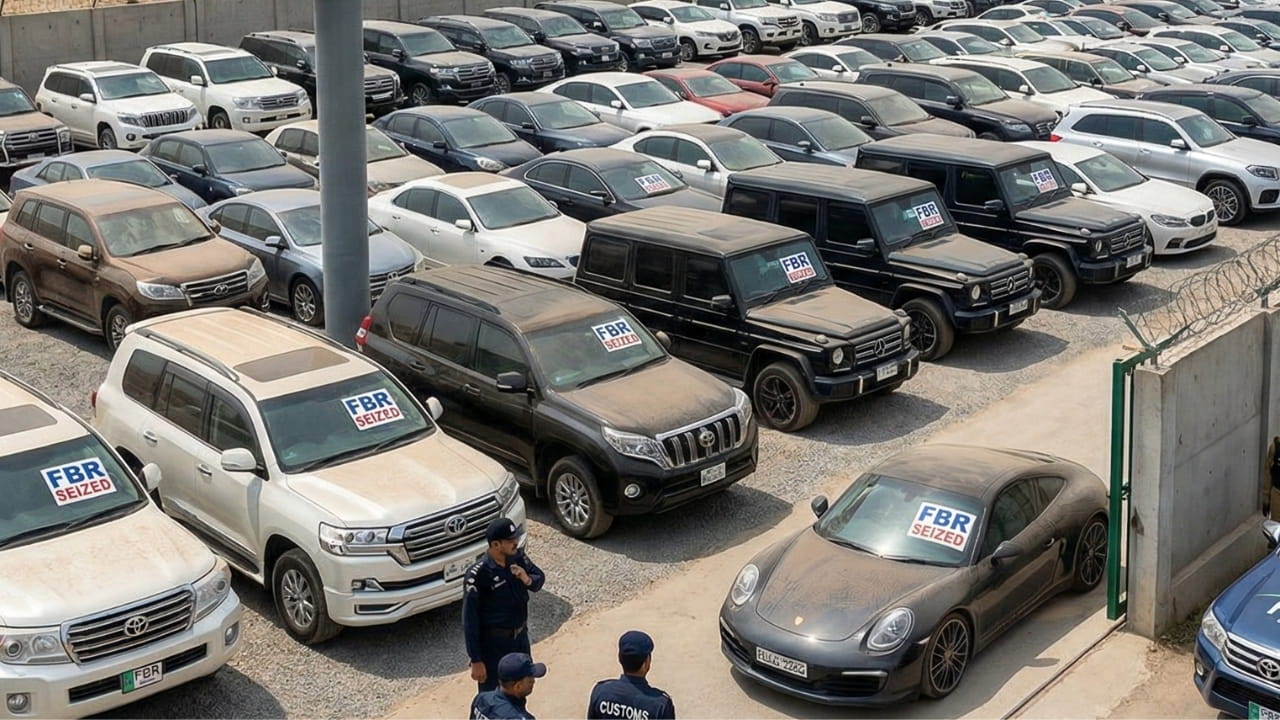
In a strategic move that turns the tables on smugglers, the Federal Board of Revenue has announced that confiscated luxury vehicles, previously sitting idle in government lots, will now be pressed into service for anti-smuggling operations. The policy, which took effect from April 2026, represents one of the most practical approaches to asset utilization Pakistan's tax authority has adopted in recent years.
The core idea is elegantly simple: take the high-performance vehicles seized from smugglers and use them to chase down more smugglers.
What Exactly Is Changing?
The FBR has issued Customs General Order 4 of 2026, which establishes a comprehensive framework for handling what officials call tampered vehicles, those with altered, cut-and-weld, or otherwise suspicious chassis numbers that cannot be legally registered for public road use.
Under the new rules, vehicles with engine capacities above 1800cc will be allocated to Anti-Smuggling and Enforcement formations. This includes the rugged terrain of Balochistan's border posts and Khyber Pakhtunkhwa's critical crossing points.
| Region | Border Areas |
|---|---|
| Balochistan | Gwadar, Gabd, Mand, Panjgur, Taftan, Katagar, Dalbandin, Chaman |
| Khyber Pakhtunkhwa | Angoor Ada, Ghulam Khan, Kharlachi, Torkham, Gilgit, Sost |
Priority Allocation Chain
- First Priority: Customs Wing formations for anti-smuggling and enforcement operations
- Second Tier: Other government and semi-government departments at subsidized rates (15% for federal bodies, 50% for provincial)
- Third Category: Government-owned educational, medical, and scientific institutions (buses, coasters, vans free of cost with ministry approval)
- Officers BS-19: May be allocated vehicles up to 1800cc for mobility; larger engines strictly reserved for enforcement
The Digital Tracking Revolution
Perhaps the most forward-looking aspect of this policy is the mandatory digital tracking system. Every confiscated tampered vehicle will be entered into a centralized database containing complete forensic reports, chassis plate data and photographs, vehicle condition assessment, current litigation status, and allocation and usage history. This system will be accessible to the Cabinet Division, creating unprecedented transparency in how seized assets are managed.
Vehicle Lifecycle Management
- Quarterly Reviews: All formations must conduct quarterly reviews of vehicle requirements
- End of Life: Vehicles reaching end of serviceable life (20 years for above-1800cc, 15 years for smaller engines) must be returned for supervised dismantling
- Five-Year Rule: Any vehicle undisposed of within five years of availability faces mandatory dismantling
The Legal Foundation
This policy builds on Section 182 of the Customs Act, 1969, read together with Section 187A, which provides the legal basis for utilizing seized assets for official purposes. The journey to this policy actually began in mid-2025, when the Standing Committee of the National Assembly first recommended granting FBR legal authority to use tampered vehicles operationally.
FBR Chairman Rashid Mehmood Langrial had made an impassioned case, stating flatly that these vehicles are not just illegal, they pose serious risks to road safety and national security, and that tampered vehicles must never be allowed back into the public market. At that time, the chairman had even suggested destroying such vehicles rather than risking their return to smuggling networks. The final policy strikes a balance, keeping them in government service where they can do public good while permanently barring private ownership.
| Entity | Purchase Price (% of Reserve Value) | Eligible Vehicle Types |
|---|---|---|
| Federal Departments | 15% | All eligible vehicles |
| Provincial Departments | 50% | All eligible vehicles |
| Educational, Medical, Scientific Institutions | Free (with ministry approval) | Buses, coasters, vans only |
| Private Individuals | Not permitted | None |
What This Means for Anti-Smuggling Efforts
The operational impact could be substantial. Enforcement units in remote areas often struggle with inadequate transport. Placing high-performance seized vehicles directly into their fleets should improve response times to smuggling intelligence, patrol coverage in difficult terrain, pursuit capability when intercepting smuggler convoys, and officer safety in high-risk border zones.
Moreover, the policy eliminates the perverse incentive structure where smugglers could sometimes buy back their own confiscated vehicles at auction. That door is now firmly closed.
Key Enforcement Data
According to recent enforcement data, Customs authorities in Quetta alone seized 28 non-customs-paid vehicles worth Rs272 million in late 2025, including high-value models perfect for operational duty.
Rather than letting these assets rust or selling them at fractions of their value, the FBR is now deploying them where they are most useful. This is not just clever. It is cost-effective governance.
Oversight and Compliance
The FBR has emphasized that allocations will be reviewed by a committee headed by the Member (Customs Operations), which holds final approval authority. Regular audits will monitor compliance, and violations can result in cancellation of allocations, seizure of vehicles, and disciplinary action. This layered oversight, including committee approval, digital tracking, quarterly reviews, and audit provisions, suggests the FBR is serious about preventing misuse of what could otherwise become a tempting perk system.
Frequently Asked Questions
Will these confiscated luxury cars ever be sold to the general public?
No. The policy explicitly prohibits the sale of tampered vehicles to individuals in any personal capacity. Only government departments, semi-government organizations, and specified public institutions are eligible to acquire them.
What exactly is a tampered vehicle?
A tampered vehicle is one whose chassis number has been altered, cut and welded, filled with welding material, re-stamped, or otherwise modified to conceal its true identity. Under Pakistani customs law, such vehicles are presumed smuggled and subject to confiscation regardless of any registration with motor authorities.
Why can't these vehicles simply be registered and sold normally?
Because their identification numbers have been compromised, they cannot be reliably verified for legal import status. Allowing them into the public market would create safety risks and essentially legitimize smuggling. The government's position is that such vehicles should either serve public purposes or be destroyed.
How much will government departments pay for these vehicles?
Federal departments pay only 15 per cent of the assessed reserve value, while provincial departments pay 50 per cent. Reserve prices are determined based on vehicle condition, model year, and prevailing market benchmarks.
Can educational institutions really get these vehicles for free?
Yes, but only specific types, primarily buses, coasters, and vans, and only government-owned educational, medical, and scientific institutions with written approval from the relevant ministry.
How will the public know this is not just a perk for FBR officers?
The digital tracking system provides transparency. Every vehicle's details, including forensic reports, photographs, condition, and allocation history, will be recorded and accessible to the Cabinet Division. Quarterly reviews and audits add additional oversight layers.
The Bottom Line
The FBR's Customs General Order 4 of 2026 represents a fundamental shift in how Pakistan handles confiscated smuggled vehicles. Rather than letting them deteriorate in impound lots or risk re-entering the black market through auctions, the government is putting these high-performance assets to work exactly where they are needed most.
For enforcement personnel patrolling Pakistan's rugged western borders, receiving seized Toyota Land Cruisers and similar robust vehicles could meaningfully improve operational effectiveness. For taxpayers, this policy ensures that assets seized from lawbreakers serve the public good rather than becoming administrative burdens.
The digital tracking system, layered oversight, and strict prohibition on private sales suggest the FBR has learned from past failures in asset management. Whether this policy succeeds in practice will depend on implementation fidelity at the ground level. But the framework itself represents a thoughtful, practical approach to a long-standing problem.
Share this Current Affairs Update:
Leave a Comment
Your feedback is important to us. Submitted comments are kept private and are for internal review only.