Big Relief Coming? Pakistan Government Plans Major Tax Cuts for Salaried Class, Real Estate, and Exporters in FY27 Budget
Published by VerseZip Current Affairs Desk
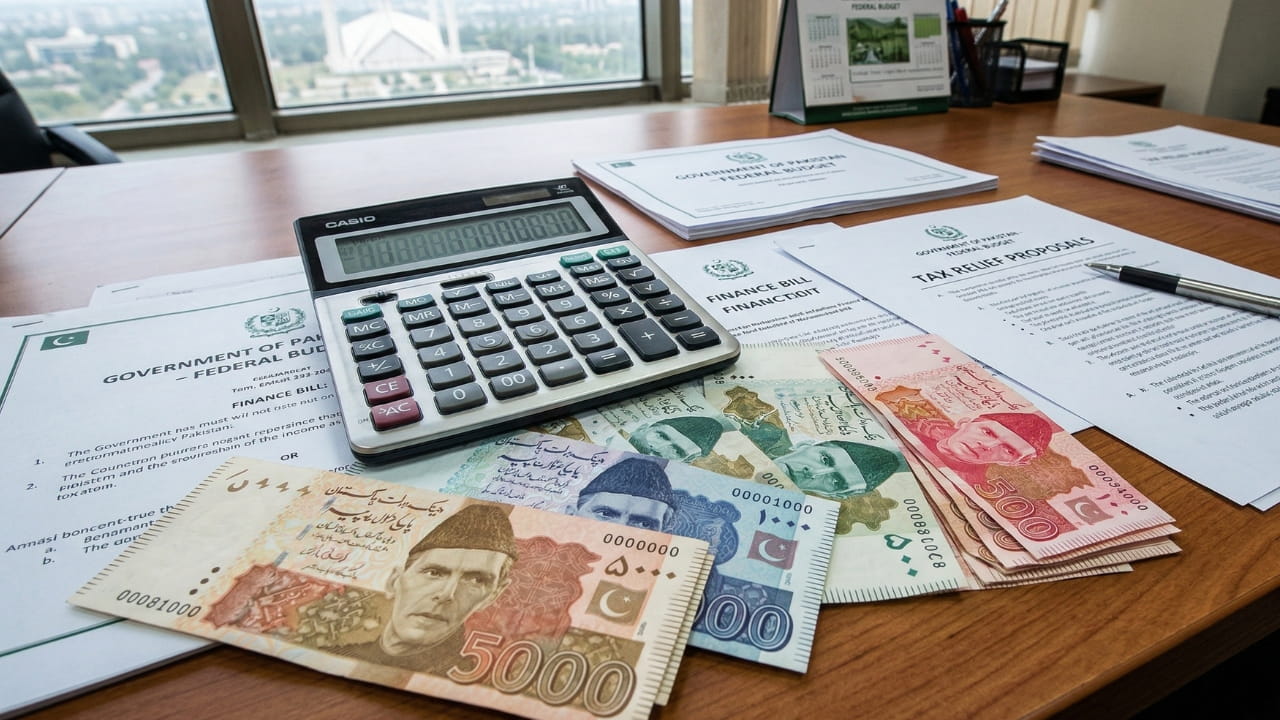
If you are a salaried employee feeling crushed by taxes, a real estate investor watching the market stall, or an exporter struggling to stay competitive, the upcoming budget might finally bring you some good news.
The federal government is working on a growth-focused budget for 2026-27 that aims to put money back into people's pockets and revive key sectors of the economy. Sources indicate that major relief is on the horizon for the salaried class, real estate, small businesses, and export industries.
Finance Minister Muhammad Aurangzeb has reportedly assured that the controversial super tax could be abolished or significantly reduced. But here is the catch: the International Monetary Fund is pushing back hard.
At a Glance: Key Proposed Measures for FY27 Budget
| Sector | Proposed Relief | Current Challenge |
|---|---|---|
| Salaried Class | 5% reduction in income tax rates for higher income slabs | High tax burden causing brain drain |
| Super Tax | Complete abolition or significant reduction | Rs150 billion revenue hole to fill |
| Real Estate | Stimulus package, rollback of Section 7E (tax on fictitious income) | Stalled market, low investor confidence |
| Exports | Reduced tax rates, timely refund payments, cheaper financing | High production costs, delayed refunds |
| SMEs | Simplified regulations, easy access to credit | Complex paperwork, no bank financing |
| IT and Pharma | Industrial policy reforms, tax incentives | Need for growth capital |
What Is the Government Planning? A Sector-by-Sector Breakdown
1. Salaried Class: The Long-Awaited Relief
Salaried people in Pakistan pay some of the highest taxes relative to their income. Unlike business owners who can claim expenses, employees have taxes deducted at source with no way out.
The government plans to reduce the tax rate for salaried individuals by 5 per cent in the higher income brackets. This would particularly help those earning above Rs5 million annually. The government is worried about brain drain. Highly skilled professionals are leaving Pakistan because the tax burden makes staying here unattractive.
However, the IMF has raised concerns. Reducing salaried taxes will cost the government approximately Rs15 to 20 billion in lost revenue. The IMF wants to know where that money will come from.
2. Super Tax: A Controversial Levy on the Rich
The super tax was introduced as a one-time levy on high earners, including banks, auto companies, cement manufacturers, and individuals with very high incomes. But one-time turned into multiple years.
Finance Minister Aurangzeb has reportedly assured that the super tax will either be completely abolished or significantly reduced. If you earn over Rs150 million annually, you currently pay an additional super tax of up to 10 per cent. Banks and large corporations pay an additional 4 to 10 per cent super tax on their profits.
The IMF has asked a pointed question: Where will the government find Rs150 billion in alternative revenue if the super tax is abolished in one go? The fund wants to see a clear plan before agreeing to any cuts.
What Is Section 7E? Why Everyone Wants It Removed
Section 7E taxes the deemed income from property, meaning even if your property did not generate any rent or profit, you still pay tax on its estimated value. Real estate developers and investors have been demanding its removal for years.
The government is reportedly considering a rollback of Section 7E as part of the real estate stimulus package.
3. Real Estate: A Stimulus Package to Revive the Market
The real estate sector has been in a deep freeze. High taxes, economic uncertainty, and the controversial Section 7E have pushed investors to the sidelines. The government is proposing a real estate stimulus package to encourage construction and investment, a rollback of Section 7E, and incentives for overseas Pakistanis to invest in property.
4. Exports and Industry: Lower Taxes, Faster Refunds
Pakistan's export sectors including textiles, IT, pharmaceuticals, minerals, and agriculture have been struggling. The government is proposing reduced tax rates for export sectors, timely refund payments, easier financing for SMEs, and lower taxes on industrial machinery and raw materials.
5. SMEs: Simplified Regulations, Easier Credit
Small and medium enterprises face two massive hurdles: complex regulations and no access to bank financing. The government is proposing simplified regulations for SMEs, easy access to credit through low-markup financing schemes, and gradual digitalization of the tax sector to reduce paperwork and harassment.
The IMF Factor: The Elephant in the Room
Pakistan cannot simply print money to fund these tax cuts. The country is under an IMF program, and any budget must be approved by the fund.
During virtual talks with Pakistani authorities in March 2026, the IMF expressed serious concerns. The fund argues that one-time measures might help the FBR collect revenue, but how will the government achieve revenue targets for FY27 after cutting taxes? The IMF wants to see alternative revenue sources before agreeing to any tax cuts.
| Event | Date | Purpose |
|---|---|---|
| IMF and World Bank Spring Meetings | April 13-18, 2026 | High-level negotiations in Washington, DC |
| Virtual Talks | May 2026 | IMF mission and Pakistani authorities finalize budget details |
| Budget Presentation | June 2026 | Budget presented in Parliament |
Power Subsidy: Good News for Electricity Consumers
In a separate development, the IMF has approved Rs830 billion in power subsidies for the 2026-27 budget. Your electricity bills will be lower than they would otherwise be. About Rs300 billion of this subsidy will cover losses from electricity theft and poor bill recovery. The subsidy is about 16 per cent lower than what the government originally requested.
However, the IMF has made it clear that electricity tariffs will increase in January 2027 under the annual tariff adjustment mechanism. So the relief may be temporary. Additionally, the IMF did not approve any subsidy for petrol and diesel, even as global fuel prices rise due to Middle East tensions. This means fuel prices will likely remain high or increase further.
The Bigger Picture: Why This Budget Matters
This is the first full budget after Pakistan stabilized its economy following the 2023 near-default crisis.
- What the government has achieved: Inflation dropped from nearly 35% to below 7%, policy rate reduced to 10.5%, tax-to-GDP ratio improved to 10.5%
- What the government wants to achieve now: Shift from austerity to growth, encourage private sector investment, create jobs through export growth and industrial expansion
Frequently Asked Questions
Will salaried individuals get tax relief in the FY27 budget?
The government has proposed a 5 per cent reduction in tax rates for higher income brackets. However, this requires IMF approval. The IMF has raised concerns about lost revenue, so the final outcome is not guaranteed.
What is the super tax, and will it be abolished?
The super tax is an additional levy on high earners (individuals earning over Rs150 million) and large corporations. The government wants to abolish or significantly reduce it, but the IMF has asked where the alternative Rs150 billion in revenue will come from.
What is Section 7E, and why does everyone want it removed?
Section 7E taxes the deemed income from property, meaning you pay tax on your property's estimated value even if it generated no rent or profit. Real estate investors have been demanding its removal for years. The government is reportedly considering a rollback.
Will electricity prices go down?
The IMF has approved Rs830 billion in power subsidies for FY27, which will keep bills lower than they would otherwise be. However, the IMF has also mandated a tariff increase in January 2027.
What about petrol and diesel subsidies?
The IMF has not approved any subsidy on petrol and diesel, even as global prices rise. Expect fuel prices to remain high.
When will the budget be announced?
The budget for FY 2026-27 is expected to be presented in June 2026, after the IMF and World Bank Spring Meetings in April and subsequent virtual talks in May.
The Bottom Line: Hope with Conditions
The government is promising a pro-growth, pro-business budget that provides meaningful relief to the salaried class, real estate investors, and exporters. But none of this is final yet. The IMF holds significant sway over Pakistan's budget decisions. If the fund does not agree to the proposed tax cuts, the government will have to scale back its plans.
Watch the April IMF and World Bank meetings from April 13 to 18, which will give early signals about what the IMF will accept. Follow the May virtual talks, where the real negotiation happens. Do not make major financial decisions based solely on budget rumors. Wait for the actual budget announcement in June.
For now, the direction is positive. The government is clearly listening to the concerns of taxpayers, investors, and businesses. Whether those promises survive IMF negotiations remains to be seen.
This article is based on official statements, verified news reports, and expert analysis available as of April 10, 2026. Budget proposals are subject to change based on IMF negotiations and parliamentary approval.
Share this Current Affairs Update:
Leave a Comment
Your feedback is important to us. Submitted comments are kept private and are for internal review only.