Pakistan Deploys Fighter Jets to Saudi Arabia: What the New Defence Pact Means for Regional Security
Published by VerseZip Current Affairs Desk
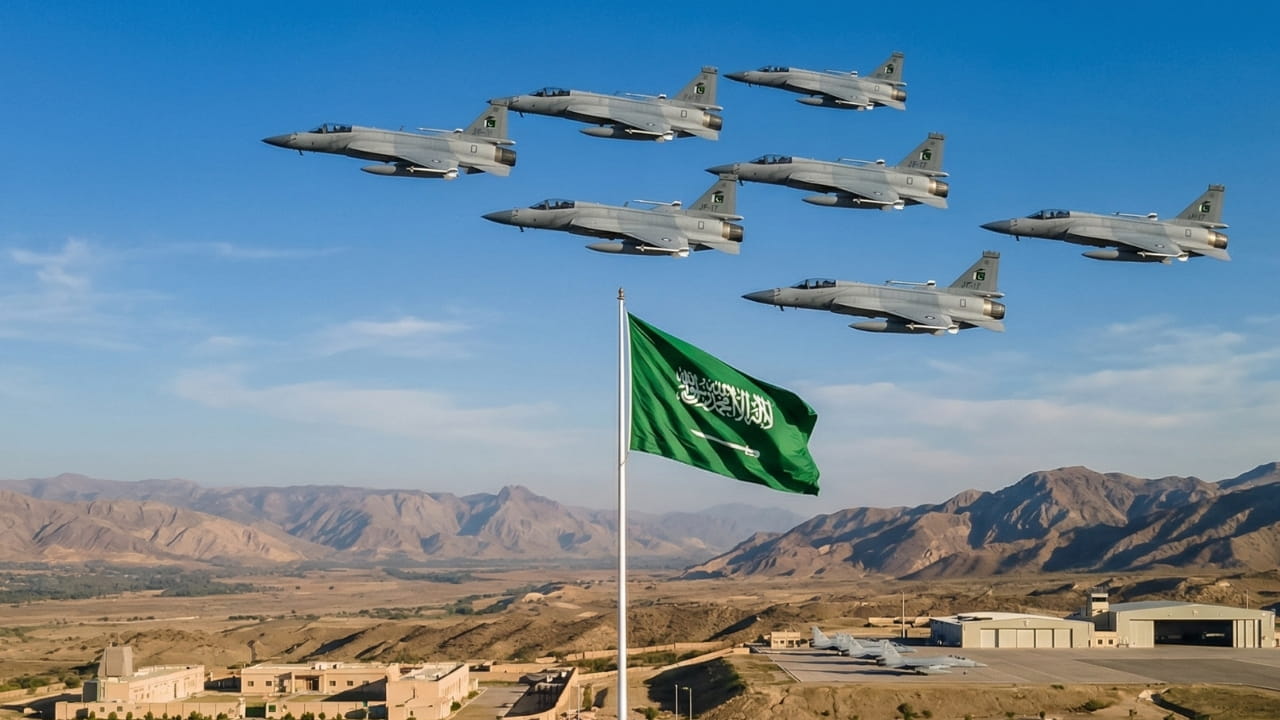
In a significant move that signals the deepening of military ties between two long-time allies, Pakistan has deployed fighter jets and military personnel to Saudi Arabia. The deployment, confirmed by the Saudi Defence Ministry on Saturday, comes under a landmark mutual defence agreement signed between the two nations in September 2025.
The Big News: Pakistani Jets Have Landed in Saudi Arabia
According to an official statement from Saudi Arabia's Defence Ministry, Pakistani fighter jets and support aircraft have arrived at the King Abdulaziz Air Base in the Kingdom's Eastern Province.
- Combat aircraft from the Pakistan Air Force
- Support aircraft for logistical and operational assistance
- Military personnel to manage and coordinate the deployment
The Saudi statement made it clear that this move aims to strengthen joint defence cooperation and support regional and international security and stability. This is not a routine military drill or a training exercise. This is a real deployment under a real defence pact, and the timing is anything but coincidental.
Deployment at a Glance
- Location: King Abdulaziz Air Base, Eastern Province, Saudi Arabia
- Forces Deployed: Combat aircraft + Support aircraft + Military personnel
- Legal Basis: Strategic Mutual Defence Agreement (SMDA) signed September 17, 2025
- Purpose: Strengthen joint defence cooperation, support regional security
Why Now? Understanding the Timing
To understand why Pakistani jets are in Saudi Arabia right now, you need to look at what has been happening in the region over the past few weeks.
- Recent Attacks on Saudi Infrastructure: Just days before the deployment, Iranian-backed attacks targeted key energy infrastructure in Saudi Arabia, causing significant concern in Riyadh.
- The Ongoing Iran-US-Israel Conflict: The broader Middle East is currently engulfed in a war involving the United States, Israel, and Iran. Tehran has launched retaliatory strikes against Gulf states.
- The Islamabad Talks: Pakistan is currently hosting peace talks between the United States and Iran in Islamabad, while the Saudi Finance Minister was in Pakistan just a day before the deployment announcement.
The Defence Pact: What Was Signed in 2025?
On September 17, 2025, Pakistan and Saudi Arabia signed a landmark agreement called the Strategic Mutual Defence Agreement.
The most important part of the agreement states that any act of aggression against either country shall be considered an act of aggression against both. This language is similar to NATO's Article 5. However, experts have noted that the SMDA has some constructive ambiguity, meaning it is not an automatic trigger for war, but rather a framework for consultation and joint action.
| Year | Event |
|---|---|
| 1980s | Pakistani brigade stationed in Saudi Arabia |
| 2015 | Pakistan declined to send troops to Yemen |
| 2018 | Saudi Arabia announced $6 billion support package for Pakistan |
| September 17, 2025 | Strategic Mutual Defence Agreement signed |
| April 2026 | Fighter jets deployed under the SMDA |
The Nuclear Question: A Game-Changer?
One of the most sensitive aspects of the SMDA is whether it places Saudi Arabia under Pakistan's nuclear umbrella. When journalists asked about this after the agreement was signed, Pakistani officials were more explicit than their Saudi counterparts. The Pakistani Defence Minister stated that the country's nuclear program will be made available to Saudi Arabia if necessary under the framework of the new defence pact.
This is unprecedented. Pakistan is the first non-NPT state to extend a mutual defence clause to a non-nuclear ally. For Saudi Arabia, this provides a level of security that no Western guarantee can match, especially in an era of uncertain US commitments.
What Does Each Country Get?
Pakistan Gets
- Financial support during economic crises
- Diplomatic backing on Kashmir
- Access to Saudi funding for military modernization
Saudi Arabia Gets
- Access to Pakistan's combat experience
- Nuclear umbrella protection
- A reliable partner without Western political conditions
The Economic Connection: Defence and Dollars Go Hand in Hand
The military deployment is happening alongside a major economic push from Saudi Arabia. Just one day before the jets arrived, Saudi Finance Minister Mohammed bin Abdullah Al-Jadaan was in Islamabad meeting with Prime Minister Shehbaz Sharif. The visit was described as a show of economic support for Pakistan. This follows Pakistan's recent decision to repay $3.5 billion in loans to the UAE and ongoing discussions about extending Saudi oil financing facilities.
The message is clear: Saudi money supports Pakistan's economy, and Pakistani military power supports Saudi security. It is a classic exchange of strategic interests.
Pakistan's Delicate Balancing Act with Iran
Pakistan shares a 909-kilometer border with Iran. Despite the defence pact, Pakistan has so far avoided directly engaging Iranian forces. While Pakistani leaders have publicly condemned attacks on Saudi Arabia and invoked the SMDA in conversations with Iranian officials, actual military involvement has been limited. Foreign Minister Ishaq Dar told Iranian leaders to take care of our pact with Saudi Arabia. Army Chief Field Marshal Asim Munir made an emergency visit to Riyadh to discuss joint measures under the SMDA. But deploying fighter jets to Saudi air bases is different from sending troops into combat against Iran. Pakistan is treading carefully, and the world is watching.
The Bigger Picture: An Islamic NATO?
Some analysts see the Pakistan-Saudi defence pact as the first step toward a broader Islamic military alliance, sometimes called an Islamic NATO. The idea has been discussed for years. In 2015, Saudi Arabia launched the Islamic Military Counter Terrorism Coalition, a 43-nation alliance of Muslim-majority countries. The SMDA goes further than the IMCTC. It is a binding bilateral treaty with a nuclear-powered ally. If other Muslim countries join similar arrangements, it could fundamentally reshape the security architecture of the Middle East, potentially reducing reliance on the United States and creating a bloc of nations with shared religious and strategic interests.
What This Means for the Common Person
For Pakistanis
- Stronger ties mean continued financial support
- Potential risks if drawn deeper into conflict
- National pride in regional leadership role
For Saudis
- Enhanced security from air threats
- Reassurance of nuclear-armed ally
- Greater confidence for diplomatic initiatives
For the Region
- Increased deterrence against aggressors
- Potential escalation if seen as threat
- Shifting balance away from Western alliances
Frequently Asked Questions
How many fighter jets has Pakistan sent to Saudi Arabia?
The exact number has not been publicly disclosed. The Saudi Defence Ministry confirmed that fighter jets and support aircraft have arrived at King Abdulaziz Air Base, but specific numbers remain classified for operational security reasons.
Is Pakistan now at war with Iran?
No. Pakistan has not declared war on Iran nor engaged in direct combat with Iranian forces. The deployment is currently positioned as a defensive measure to enhance Saudi Arabia's air defence capabilities.
What is the Strategic Mutual Defence Agreement (SMDA)?
The SMDA is a treaty signed between Pakistan and Saudi Arabia on September 17, 2025. Its core clause states that any aggression against either country will be considered aggression against both, similar to NATO's Article 5.
Does the pact include Pakistan's nuclear weapons?
Pakistani officials have indicated that the country's nuclear capability will be made available to Saudi Arabia if necessary under the pact. This is seen as a major escalation in the strategic relationship.
How does Iran view this deployment?
Iran has not officially commented on the deployment. However, Tehran previously sought assurances from Pakistan that Saudi territory would not be used as a launchpad for attacks against Iran. The deployment is likely viewed with concern in Tehran.
Could this deployment lead to direct Pakistan-Iran conflict?
It is possible but unlikely in the short term. Pakistan has significant domestic considerations, including a large Shia population and a long border with Iran, that make direct conflict extremely costly. Pakistan is likely hoping the deployment serves as deterrence rather than a trigger for war.
The Bottom Line
Pakistan has deployed fighter jets to Saudi Arabia under a mutual defence pact signed in 2025. The move is a response to recent attacks on Saudi infrastructure and the broader regional conflict involving Iran, the United States, and Israel.
The deployment is significant for three reasons: it activates the SMDA, a treaty that many wondered was merely symbolic; it puts Pakistani forces on Saudi soil at a time of genuine crisis; and it sends a message to Iran, Israel, and the world that Pakistan and Saudi Arabia are serious about their alliance.
But questions remain. Will these jets see combat? How far is Pakistan willing to go to defend Saudi Arabia? And what does Iran think about all of this?
For now, the fighter jets are in place. The pact has been activated. And the world is watching to see what happens next.
Share this Current Affairs Update:
Leave a Comment
Your feedback is important to us. Submitted comments are kept private and are for internal review only.