Pakistan Achieves Historic Milestone with Revolutionary Horizontal Oil Drilling Technology: Pasakhi-13 Well Transforms Energy Production Landscape
Published by VerseZip Current Affairs Desk
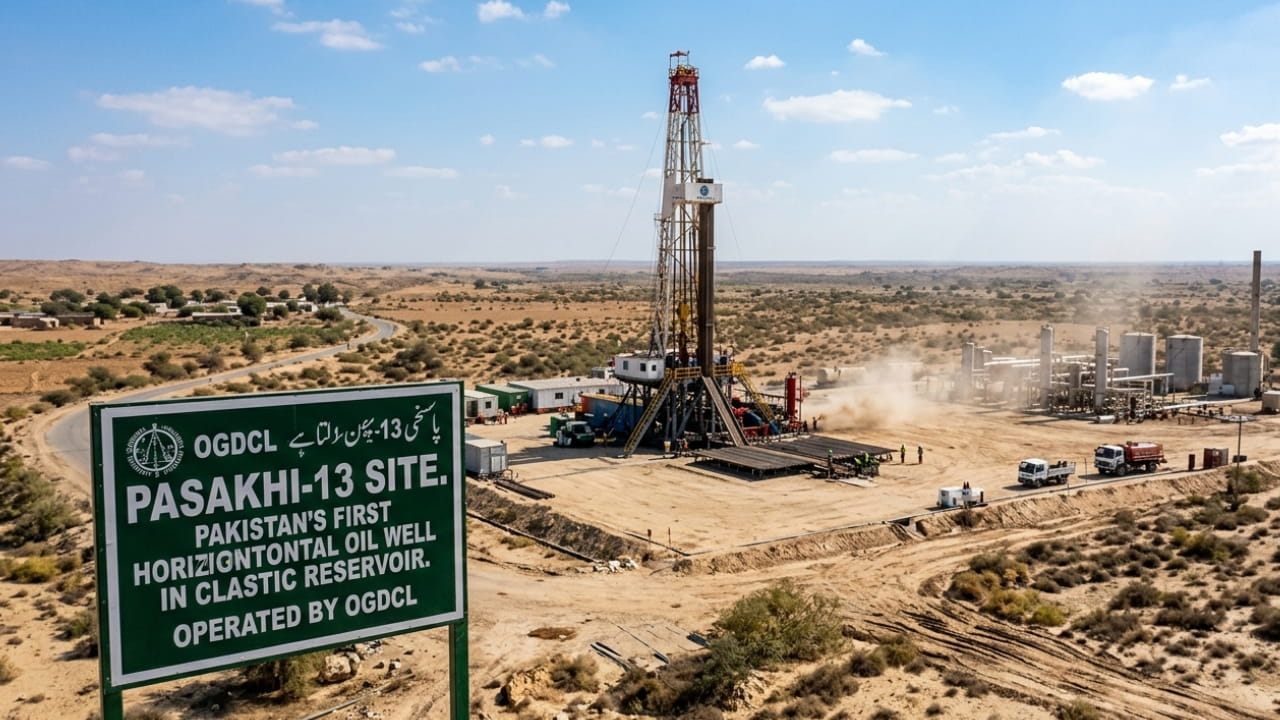
Pakistan has reached a groundbreaking achievement in its energy sector with the successful launch of its first horizontal oil well in a clastic reservoir. The Oil and Gas Development Company Limited has successfully commenced oil production from its development well Pasakhi-13, marking a historic milestone as Pakistan's first successful horizontal oil well in clastic reservoir. This revolutionary development represents a significant leap forward in the country's efforts to boost indigenous oil production and strengthen energy independence.
When the Game-Changing Well Started Production
OGDCL commenced oil production from its Pasakhi-13 well in March 2026, with the disclosure to the Pakistan Stock Exchange announcing this historic achievement just days ago. The timing of this breakthrough comes at a crucial moment when Pakistan is actively working to reduce its dependency on imported oil and enhance domestic energy production capabilities.
Pasakhi-13 Well: Key Facts
Revolutionary Technology Behind the Success
The Pasakhi-13 well showcases cutting-edge drilling technology that sets new standards for Pakistan's oil industry. The well was drilled to a measured depth of 2,966 meters, including a 546-meter horizontal section with application of geo-steering technology, enabling precise navigation within a narrow 3-meter drilling window to optimally target the sweet spot within the reservoir.
The implementation of this advanced technology did not stop at drilling. The well was completed and tested using a short string Electric Submersible Pump, optimized for horizontal well configurations. This sophisticated setup ensures maximum efficiency in oil extraction from the challenging clastic reservoir environment.
Impressive Results: Triple the Production
What makes this achievement truly remarkable is the production efficiency compared to traditional methods. Despite challenging reservoir characteristics, horizontal drilling enabled enhanced reservoir exposure, delivering nearly threefold higher production compared to offset wells under similar conditions. This threefold increase in production demonstrates the transformative potential of horizontal drilling technology for Pakistan's oil sector.
| Comparison Metric | Traditional Vertical Wells | Pasakhi-13 Horizontal Well |
|---|---|---|
| Production Output | Baseline | Nearly three times higher |
| Reservoir Exposure | Limited | Enhanced through 546-meter horizontal section |
| Drilling Precision | Standard vertical drilling | Geo-steering within 3-meter window |
| Production Technology | Traditional pumps | Electric Submersible Pump optimized for horizontal configuration |
OGDCL's Leading Role in Pakistan's Energy Sector
OGDCL holds a dominant position in Pakistan's oil and gas landscape. The company operates 50 oil and gas fields across Pakistan, making it the country's largest exploration and production company. The company manages 18 processing plants strategically located across the nation.
The company has achieved significant production milestones in recent years. OGDCL's commitment to production optimization has led to a remarkable achievement, surpassing a daily gross crude oil production of 50,000 barrels. This achievement underscores the company's technical expertise and operational excellence in maximizing output from both new discoveries and mature fields.
Pakistan's Current Oil Production Landscape
Understanding the broader context of Pakistan's oil production helps highlight the significance of the Pasakhi-13 breakthrough. Pakistan produces approximately 81,426 barrels per day of oil as of 2024, ranking the country 51st globally in oil production.
However, domestic production meets only a fraction of the country's needs. Pakistan consumes approximately 479,218 barrels per day of oil as of 2024, meaning the country relies heavily on imports to meet its energy demands. In 2018, Pakistan imported approximately 39 per cent of its oil consumption, totaling 190,632 barrels per day out of 493,582 consumed.
| Indicator | Value (2024 Data) |
|---|---|
| Pakistan Domestic Oil Production | 81,426 barrels per day |
| Pakistan Oil Consumption | 479,218 barrels per day |
| Import Dependency | Approximately 80-85% of consumption |
| Global Production Ranking | 51st in the world |
Strategic Importance and Future Implications
The Pasakhi-13 well is part of the Pasakhi and Pasakhi North Development and Production Lease, where OGDCL holds a 100 per cent working interest. This complete ownership ensures that all benefits from this technological breakthrough remain within Pakistan's control, contributing directly to national energy security.
The achievement reinforces OGDCL's commitment to technical excellence, innovation, and deployment of advanced technologies in line with global standards, while advancing indigenous hydrocarbon production and strengthening Pakistan's energy security.
"This historic achievement represents a turning point for Pakistan's oil industry, demonstrating that with the right technology and expertise, we can unlock significantly more value from our existing oil fields."
What This Means for Pakistan's Energy Future
The success of Pasakhi-13 opens new possibilities for Pakistan's oil industry. With horizontal drilling technology now proven in the challenging clastic reservoir environment, similar techniques can be applied to other fields across the country. The threefold increase in production efficiency compared to traditional wells suggests that implementing this technology more widely could significantly boost Pakistan's overall oil output without necessarily drilling more wells.
This breakthrough comes at a time when Pakistan refineries are expected to import more crude oil in the financial year ending June 30, 2025, driven by economic recovery and industrial growth. By increasing domestic production through advanced drilling techniques, Pakistan can reduce its reliance on expensive imports and improve its trade balance.
The Technology Revolution Continues
The horizontal drilling success at Pasakhi-13 represents just the beginning of Pakistan's technological transformation in oil extraction. OGDCL has drilled its first dedicated shale gas well, KUC-1, in the Kunnar M.L area, showing the company's commitment to exploring unconventional hydrocarbon resources alongside conventional oil production.
Economic Impact and National Benefits
The enhanced production from horizontal drilling technology brings multiple economic benefits to Pakistan. Each barrel of oil produced domestically saves foreign exchange that would otherwise be spent on imports. With the Pasakhi-13 well producing 460 barrels per day, this single well contributes significantly to reducing import dependence while generating revenue and employment opportunities in the local economy.
Key Takeaways: Pasakhi-13 Breakthrough
- Historic First: Pakistan's first successful horizontal oil well in a clastic reservoir
- Production Boost: Nearly three times higher output than traditional vertical wells
- Advanced Technology: Geo-steering with 3-meter precision, 546-meter horizontal section
- Daily Output: 460 barrels of oil per day
- Location: District Hyderabad, Sindh province
- Operator: OGDCL with 100% working interest
- Strategic Impact: Reduced import dependence, enhanced energy security
Frequently Asked Questions
What is the significance of the Pasakhi-13 well?
Pasakhi-13 is Pakistan's first successful horizontal oil well in a clastic reservoir, marking a historic technological breakthrough that delivers nearly three times higher production compared to traditional vertical wells.
Where is the Pasakhi-13 well located?
The well is located in District Hyderabad, Sindh province, within the Pasakhi and Pasakhi North Development and Production Lease.
How much oil does Pasakhi-13 produce?
The well produces 460 barrels of oil per day, representing a significant increase over traditional wells in similar conditions.
What technology made this achievement possible?
The well utilized geo-steering technology to navigate within a narrow 3-meter drilling window, a 546-meter horizontal section, and an Electric Submersible Pump optimized for horizontal well configurations.
Who operates the Pasakhi-13 well?
The Oil and Gas Development Company Limited operates the well with 100 per cent working interest in the lease.
How does this impact Pakistan's energy security?
By increasing domestic oil production through advanced technology, Pakistan can reduce its reliance on expensive oil imports, saving foreign exchange and strengthening energy independence.
Final Thoughts
The successful implementation of horizontal drilling at Pasakhi-13 marks a turning point for Pakistan's oil industry. This achievement demonstrates that Pakistan can adopt and successfully implement world-class drilling technologies to maximize recovery from its hydrocarbon reserves. As the country continues to face energy challenges, innovations like these provide hope for greater energy independence and economic stability.
The Pasakhi-13 success story shows that with the right technology, expertise, and commitment, Pakistan can unlock significantly more value from its existing oil fields. This breakthrough not only boosts current production but also sets the stage for a more technologically advanced and productive future for Pakistan's entire energy sector.
As Pakistan moves forward, the lessons learned and technologies proven at Pasakhi-13 will undoubtedly be applied across other fields, potentially multiplying the benefits many times over. This historic achievement truly represents a new dawn for Pakistan's journey toward energy self-sufficiency and economic prosperity.
Share this Current Affairs Update:
Leave a Comment
Your feedback is important to us. Submitted comments are kept private and are for internal review only.