Fact-Check: Did Hackers Really Breach Pakistan's NEOC? NDMA Clarifies
Published by VerseZip Tech Desk
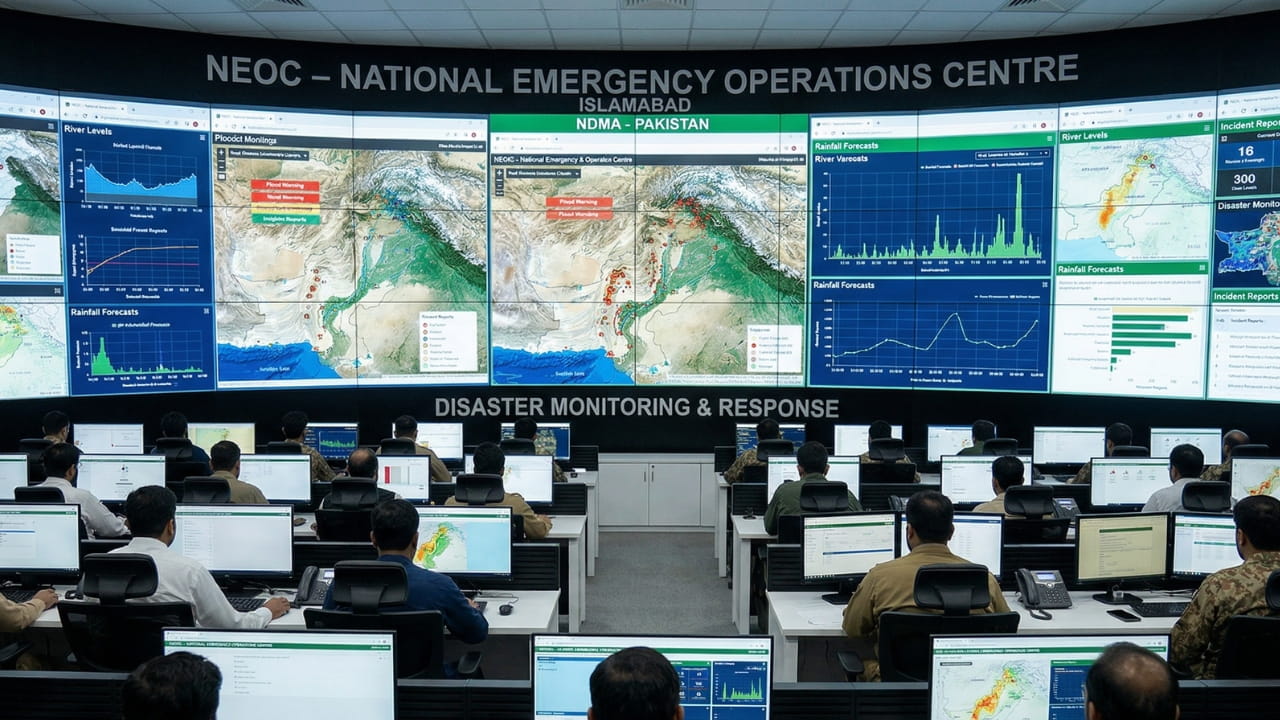
In the last 24 hours, social media has been buzzing with alarming claims that Pakistan's top disaster surveillance system, the National Emergency Operations Centre, has been hacked.
The short answer is no. Official sources have categorically denied these claims. However, a threat actor named h4xorvats has allegedly leaked a dataset of over 13,000 files, claiming to contain everything from CNICs to bank details of Pakistani citizens.
Given the sensitivity of the data mentioned, it is crucial to separate fact from fiction. Here is everything you need to know about the alleged breach, what data was actually compromised, and the official stance of the Government of Pakistan.
What Happened? The H4xorvats Allegations
On April 4, 2026, a hacker or group operating under the alias h4xorvats posted on dark web forums claiming a massive security breach. According to the post, the hackers successfully infiltrated the National Emergency Operations Centre, a high-tech hub managed by the National Disaster Management Authority.
The hacker claimed to have walked away with full source code of the NEOC web and mobile applications, and a database containing sensitive personal information including CNIC numbers, bank account details, medical histories, vaccination records, and even village addresses.
For the average Pakistani, reading claims about bank accounts and medical histories being leaked is terrifying. But there is a massive logical flaw in this story.
Official Denial: NDMA's Firm Response
In an exclusive statement, a senior NDMA official dismissed the claims as fabricated and false news.
Here is the most important technical detail that proves the hack is likely fake: NEOC does not store personal data.
Why NEOC Cannot Leak What It Does Not Have
The NDMA official clarified a critical distinction that the hacker overlooked.
- Public Data Only: NDMA acts as a consumer and producer of public-domain data. They deal with rainfall statistics, seismic sensor readings, and satellite imagery of rivers, not income tax records.
- No Medical or Bank Records: It is not the mandate of the NEOC to collect medical records or bank statements. Their job is to predict floods and earthquakes, not to track individual bank accounts.
- Open Data Policy: All NEOC-NDMA data is open and publicly available on the official website, the official stated.
The verdict: If a hacker claims to have stolen data that the organization never possessed in the first place, it is either a hoax to gain hacking fame or a case of mixing data from a completely different source.
What Is NEOC? Understanding Pakistan's Pride in Tech
The National Emergency Operations Centre is Pakistan's state-of-the-art facility for disaster preparedness. It is the system that alerts you before a flood hits.
- Tech Stack: Uses more than 300 climate sensors, satellite feeds, and AI to predict natural hazards.
- Global Recognition: Just days before the hacking allegations on March 31, 2026, ambassadors from 65 countries visited the NEOC headquarters to study Pakistan's proactive disaster management system.
- Purpose: It monitors earthquakes, cyclones, and urban flooding. It does not monitor citizens' bank balances.
How to Verify If Your Data Is Safe
Given the rise in cyber threats, here is a quick checklist for citizens worried about the recent news.
- Check the Source: Did you receive an alert from your bank about suspicious activity? No. Because no bank data was leaked from NDMA.
- Be Wary of Clickbait: The hacker's claim includes medical histories and bank accounts, two highly emotional keywords designed to make you panic and click. This is a common tactic used to sell fake databases.
- Government Stance: The government has not issued any password-reset mandates, confirming that no IT environment was compromised.
Fact-Check Summary
| Claim | Fact | Status |
|---|---|---|
| NEOC database hacked<\/td> | NDMA states no breach occurred<\/td> | False<\/td> |
| CNIC and bank data stolen<\/td> | NEOC does not store such data<\/td> | False<\/td> |
| Medical records compromised<\/td> | Not within NDMA's mandate<\/td> | False<\/td> |
| 13,000 files leaked<\/td> | Likely repackaged old data<\/td> | Unverified<\/td> |
Frequently Asked Questions
Has the NEOC or NDMA actually been hacked in 2026?
No. According to official sources at NDMA, there has been no cyber incident or suspicious activity within their environment. The claims circulating online are false.
Should I change my bank account password because of this news?
There is no need to do so based on this specific news. The NDMA does not store bank account information. The hacker's claims do not align with the type of data NDMA collects.
What kind of data does NEOC actually keep on citizens?
NEOC does not store personal details like CNIC or medical records. They rely on anonymized environmental data such as water levels and weather patterns, and public alerts. They do not have user databases filled with private citizen information.
Is the NEOC system safe to use for disaster alerts?
Yes. The system is fully operational and secure. In fact, the government has recently expanded its capabilities, integrating with private partners to deliver early warnings, and showcasing it to international diplomats.
Why would someone spread fake news about a hack?
Often, threat actors repackage old, unrelated stolen data from other breaches such as old travel agency or telecom leaks, and relabel it as a new high-profile hack to gain street credibility in the hacking community. The claims about medical and bank data are likely fabricated to make the dump seem more valuable.
The Bottom Line
While Pakistan faces real cybersecurity challenges, this specific incident appears to be a hoax. The hacker claims to have stolen medical and financial records from a platform that only monitors rainfall and earthquakes. When the story does not fit the data, trust the official denial.
Your data remains safe with NDMA, as they never had your bank details to begin with.
Share this Tech Update:
Leave a Comment
Your feedback is important to us. Submitted comments are kept private and are for internal review only.