iPhone 18 Camera Shake-Up: Samsung Sensors Are Finally Coming (But There's a Catch)
Published by VerseZip Telecom Desk
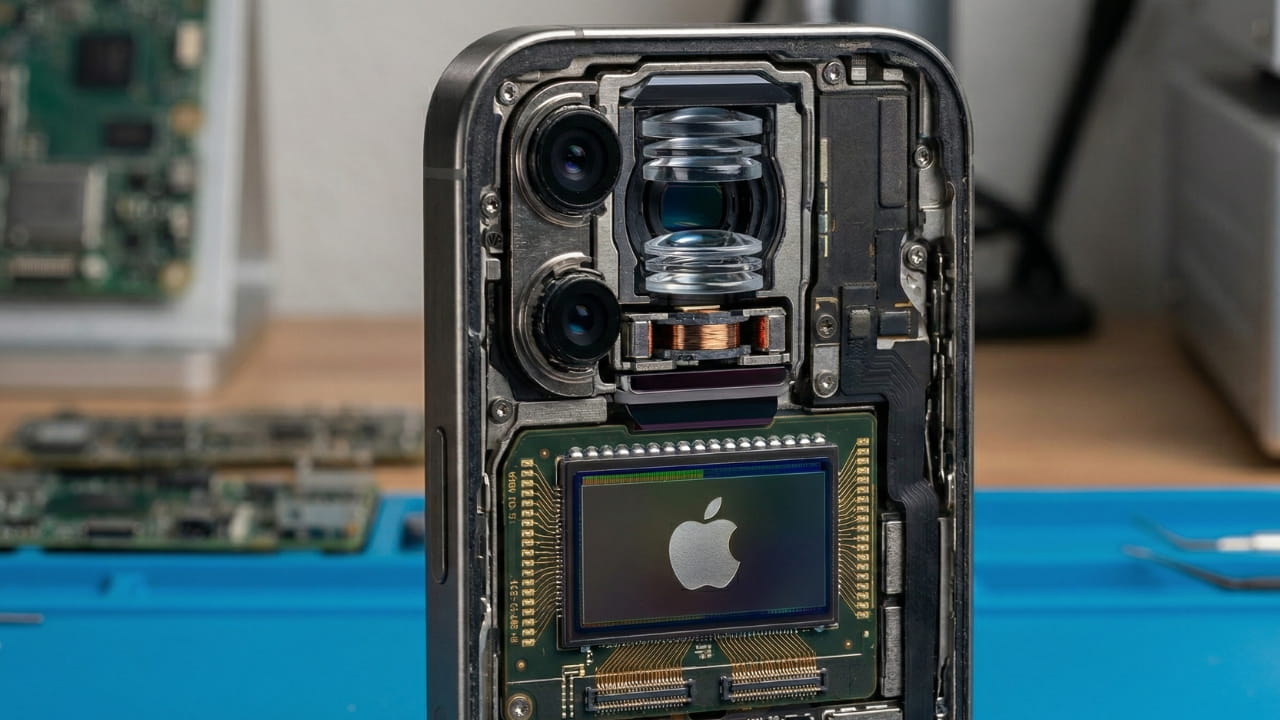
You have probably heard the buzz. Apple is finally breaking up with Sony, at least when it comes to camera parts. After more than a decade of sticking exclusively with Sony sensors, the iPhone 18 is reportedly getting a major hardware transplant from Samsung. This is not just another minor spec bump. It represents one of the most significant shifts in iPhone supply chain strategy in recent years.
The Big News: A 10-Year Partnership Takes a Turn
For years, if you looked inside an iPhone camera, you would find a Sony Exmor RS sensor. That run started way back with the iPhone 4s in 2011 and has remained exclusive ever since. But Apple has been quietly working behind the scenes to bring Samsung into the fold as a second supplier.
The two tech giants, fierce rivals in the smartphone arena but long-time partners in components like displays and memory, are collaborating on next-generation image sensors. The plan involves Samsung's semiconductor facility in Austin, Texas, which aligns nicely with Apple's broader push to bring more manufacturing stateside. Samsung is not just copying Sony's homework. They are bringing what is called a triple-layer stacked sensor design to the table.
Why a Triple-Layer Stacked Sensor Actually Matters
Most people's eyes glaze over at terms like stacked sensor, but this technology is genuinely transformative for mobile photography. A traditional sensor has the photodiodes, the part that catches light, and the processing circuitry on the same plane. When Samsung's new design stacks these components vertically into three distinct layers, several things improve dramatically.
| Feature | Traditional Sensor | Samsung Triple-Layer Sensor |
|---|---|---|
| Architecture | Single-layer (photodiodes and circuitry on same plane) | Three-layer vertical stack |
| Readout Speed | Standard | Faster, less rolling shutter distortion |
| Low-Light Performance | Good | Better, less digital noise |
| Dynamic Range | Standard | Improved (better highlights and shadows) |
| Power Consumption | Standard | Reduced |
The 48MP Reality Check
Despite some wild speculation floating around tech forums, Apple is not jumping straight to Samsung's 200MP sensors. According to supply chain reports, Samsung is developing a 50-megapixel sensor for Apple, a deliberate, stability-focused choice rather than a megapixel arms race.
This measured approach makes sense for Apple. Sony has had nearly 15 years to perfect its integration with Apple's image signal processor and software algorithms. Swapping in an unproven 200MP sensor would be a recipe for inconsistent results. Starting at 50MP gives both companies room to refine the pipeline before potentially scaling up in future generations.
The Timeline Confusion: iPhone 18 or iPhone 19?
Here is where things get messy, and why you should not necessarily expect a Samsung sensor in every iPhone 18 unit.
| Scenario | Likelihood | Details |
|---|---|---|
| iPhone 18 launch | Limited | Samsung sensors may be used in limited quantities or only in specific models |
| Wider adoption | iPhone 19 (2027) | Full-scale Samsung sensor integration could slip to iPhone 19 |
| First application | Ultra-wide camera | Reports suggest ultra-wide camera will be first to feature Samsung sensors, potentially in non-Pro models first |
What This Means for the Camera Industry at Large
This supplier shake-up extends beyond just two companies. Sony currently commands about 45 per cent of the global image sensor market, with much of that strength coming from its exclusive Apple contract. Samsung sits at roughly 19 per cent.
By opening the door to Samsung, Apple achieves several strategic goals: supply chain resilience with no more single-point-of-failure dependency on Sony, pricing leverage as competition between suppliers keeps component costs in check, and a US manufacturing footprint since Samsung's Austin facility production qualifies as domestic sourcing.
For Sony, this is an undeniable blow, though hardly a fatal one. The Japanese giant still supplies sensors to practically every other major smartphone manufacturer and dominates the high-end mirrorless camera market.
Pro Models Are Getting Additional Camera Love
- Variable aperture technology: Apple is reportedly testing a main camera with an adjustable aperture, allowing the lens to physically open wider in low light and stop down for sharper detail in bright conditions. Samsung actually pioneered this in phones with the Galaxy S9 back in 2018 but abandoned it due to space constraints.
- Brighter telephoto lens: The zoom camera on Pro models may get a wider maximum aperture (lower f-number), dramatically improving portrait mode and distant shots when lighting is not ideal.
Neither of these features has been confirmed for the base iPhone 18 models, suggesting Apple is doubling down on camera differentiation between tiers.
Frequently Asked Questions
Will all iPhone 18 models get Samsung sensors?
Probably not. Early indications point to the ultra-wide camera receiving Samsung sensors first, possibly starting with standard iPhone 18 models before expanding to Pro variants. The main wide camera may continue using Sony sensors initially.
Is Samsung's sensor actually better than Sony's?
Better depends on execution. The triple-layer stacked architecture theoretically outperforms Sony's current dual-layer Exmor RS design in speed and noise control. However, Sony has years of tuning experience with Apple's specific image pipeline. Real-world results will depend on how well Samsung's hardware and Apple's software marry together.
When will we know for sure what is inside the iPhone 18?
Apple never confirms component suppliers during keynotes. The definitive answer will come from teardowns by sites like iFixit within days of the iPhone 18 launch, expected September 2026.
Does this mean Sony and Apple are ending their relationship?
Not at all. Apple rarely burns bridges with suppliers completely. More likely, Apple will maintain Sony as a primary or secondary source while using Samsung for specific components or models. Diversification is the goal, not replacement.
Will this affect iPhone 18 pricing?
Component costs may decrease slightly with supplier competition, but Apple's pricing strategy is driven more by feature positioning and market dynamics than individual part costs. Do not expect this to lower retail prices.
The Bottom Line
The iPhone 18 camera is shaping up to be a significant departure from Apple's decade-long reliance on Sony. Samsung's triple-layer stacked sensor technology promises faster readout speeds, better low-light performance, improved dynamic range, and reduced power consumption.
However, the timeline is uncertain. Production delays may limit Samsung sensor availability to specific models or push full integration to the iPhone 19. For Pro models, variable aperture and brighter telephoto lenses could further differentiate Apple's premium offerings.
One thing is clear: Apple is diversifying its supply chain, reducing reliance on a single vendor, and potentially improving camera performance in the process. The only question is when these changes will actually reach consumers' hands.
Share this Telecom Update:
Leave a Comment
Your feedback is important to us. Submitted comments are kept private and are for internal review only.